
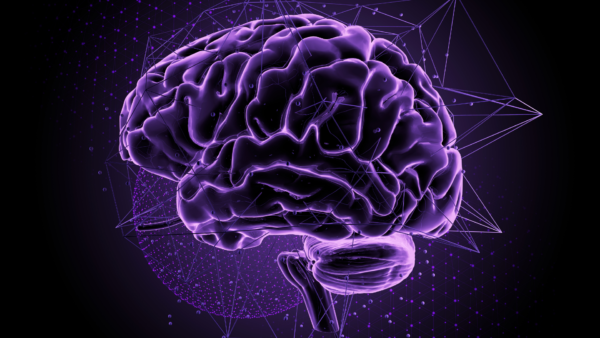
A Brief Journey into Our Unique Brain

Think about your brain – you will immediately say that it is like no other organ. Of all the human organs, the brain is the last to be demystified. The discovery of its anatomy and functions spans millennia.

Today, the neuroscientific study of the brain is an unfinished adventure and still very mysterious. Yes, our brain is different from all our other organs; it does not beat like our heart, it does not expand and contract like our lungs, it does not secrete visible substances like our bladder and intestines. But it is what keeps us alive, it is the center of consciousness, it is not ordinary at all…

Now let’s take a short trip to our brain:

Our brain, which weighs an average of 1300-1400 grams, has an extremely compact structure. When all the folds in the brain are flattened, it covers an area of about 2300 cm.

There are 100 billion nerve cells in our brain. These are the neurons that regulate heartbeat, breathing, blood pressure, control hunger, thirst, sex drive, sleep patterns.

10 billion transmitters are generated every moment. The signals carried by nerve cells travel extremely fast on neurons.

Our brain makes up 2% of our body but consumes 20% of our oxygen.

Our primitive and middle brain is 500 million years old, while our new brain is 3-4 million years old.

We use all of our brain, not just 10% of it. Brain imaging techniques show that every region of the brain is actively working. 

It is the center of our emotions that govern our behavior.

It is responsible for what we know and what we don’t know.

Our brain is selective. Although it is constantly recording an enormous amount of information, it selects only a tiny fraction of this information for processing.

Every brain is unique. The differences in each brain allow each individual to have unique personalities.

Although the brain cells in our brains do not reproduce, they can change, meaning that brain tissue can be strengthened and developed like a body muscle, depending on how much it is exercised.

Fortunately, we do not lose brain cells as we age, and we can regenerate the lost ones by activating them.

The characteristics of our brain:

It is egocentric

 Likes contrasts

Loves what is understandable

Remember the beginning and end of processes, the in-between boils away

Visual

Emotional

Loves stories

Neuroscience research has been developing at an ever-increasing pace in recent years, illuminating the complex mental and emotional processes of the brain. In this context, Electroencephalogram (EEG, brain electrical activity) and functional Magnetic Resonance Imaging (fMRI, brain blood circulation) methods, which allow the measurement of brain activity without causing any pain or damage to the subject, are the most important scientific tools at the disposal of neuromarketing.

Considered as a new generation method in today’s marketing world, ‘Neuromarketing’ is the neurological and physiological study of the mind’s subconscious reactions to various stimuli. Today, it has been scientifically proven that the unconscious mind is very effective in consumer decisions. Using this method, consumers’ unconscious perceptions, tastes, preferences, reactions and purchasing tendencies are scientifically measured.

The main advantage of the neuromarketing method is that it offers the opportunity to look at the consumer world from a broad perspective by shedding light on the parts that remain in the dark in consumer attitudes and behaviors. Technologies such as EEG, Mobile EEG, Eye Tracking, Facial Emotion Matching and Galvanic Skin Resistance are used for measurements in neuromarketing research.

“The brain loses millions of cells every day, and lost brain cells can be replaced” – Amy Cuddy” Presence

“The number of nerve cells is the same at 70 as it is at 20” – Amy Cuddy Presence

“We are not thinking machines that feel, we are feeling machines that think” – Antonio Damassio”

The transfer of 100 billion cells into a machine, immortality, is just around the corner… 

Reference:

Carter, Rita. Beyin Kitabı (s.38,39). Alfa Yayınları.

Cuddy, Amy. Presence (p.352). Little, Brown and Company. (01/30/2018).

The Effects of Attachment Styles on Consumer Behavior

Attachment theory was established through the work of John Bowlby and important contributions by Mary Ainsworth. This theory suggests that an infant’s social and emotional development is profoundly shaped by their relationship with their primary caregivers. Ainsworth designed “The Strange Situation Experiment”, which observed that infants and children develop basically three distinct styles of attachment with their caregivers: Secure, Anxious and Avoidant. In addition, attachment theory has revealed that adults rely on the attachment style they developed in childhood when perceiving and responding to intimacy in all their relationships. Briefly speaking, it has been observed that securely attached individuals are comfortable with closeness, mostly affectionate and loving; anxiously attached individuals are in constant need of closeness, overthink and worry about their relationships; and avoidantly attached individuals equate closeness with the loss of freedom and therefore try to keep closeness to a minimum.

Research shows that individuals form business relationships in ways similar to interpersonal relationships and that attachment types have an important role in understanding customer behavior and in the formation of trust and loyalty to a company.

Research investigating the effects of attachment styles on consumer behavior suggests that securely attached individuals are more likely to stay in long-term relationships with brands and companies and to trust and commit to them. Consumers with this attachment type have been observed to develop a more positive perception of satisfaction, trustworthiness and commitment to companies and company employees than insecurely attached (avoidant or anxious) consumers.

It has been observed that avoidantly attached individuals have less trust in companies, do not establish long-term relationships and do not prefer cooperation. Although many studies have shown that anxiously attached individuals trust companies less like avoidant individuals, some studies have found that anxious individuals trust companies more and establish long-term relationships with them due to their need to constantly seek closeness and maintain the relationship no matter what. It has been observed that insecurely attached consumers do not connect sufficiently with company employees and compensate for this inadequacy by connecting with the company, that is, with an abstract concept.

The research provides some recommendations for companies to implement based on consumers’ attachment types. It states that companies can approach securely attached customers through all available tools and channels as long as they treat them as equal partners without trying to gain the upper hand. Consumers with avoidant attachment style, on the other hand, should be presented with multiple options and should not be pressured to make an immediate decision. In addition, they should be reached through digital channels rather than personally, and should be exposed to less advertising and marketing. For anxiously attached consumers, companies should make intensive marketing contacts to persuade the consumer that their intentions are good and strive to build consumer trust and loyalty by demonstrating that they are interested in all the needs and problems of the consumer. Research emphasizes that companies must first establish trust for all attachment styles, and only then can they build a long-lasting relationship with the customer.

Neuromarketing uses scientific techniques and tools to understand consumer behavior and needs at a biological and psychological level. For this reason, it is thought that neuromarketing can help companies in measuring attachment types and investigating the effects of attachment types on consumer behavior. In this way, companies can better segment markets, manage customer relationships better and use resources more efficiently.

References

Neuroscientist Yağmur Başak Ören

Aaker, J., Fournier, S., & Brasel, S. A. (2004). When good brands do bad. Journal of Consumer Research, 31(1), 1-16. https://doi.org/10.1086/383419

Frydman, S., & Tena, M. A. (2022). Attachment styles and customers’ long-term relationships in a service context. International Journal of Consumer Studies, 47(1), 267-284. https://doi.org/10.1111/ijcs.12834

Levine, A., & Heller, R. (2012). Attached: The New Science of Adult Attachment and How It Can Help You Find – and Keep – Love. TarcherPerigee.

Mende, M., & Bolton, R. N. (2011). Why attachment security matters. Journal of Service Research, 14(3), 285-301. https://doi.org/10.1177/1094670511411173

2024 Consumer Psychology and Trends

Consumer-related motives can be divided into physiological and psychological. This distinction also shows the relationship between motives and needs. Physiological motives stimulate movements that are linked to the basic functions of the body. Psychological motives, on the other hand, stimulate emotional and mental movements.  Perception is the acquisition of information about the existence of an event or object through the senses. Every person gives meaning to all stimuli in the environment. Consumers perceive information from their environment. However, everyone’s perception is different and personal experiences, beliefs and values influence perception.

Marketers take these factors into account to ensure that consumers perceive their product or brand in a positive way. By drawing inferences from previous shopping experiences, consumers engage in a learning process that influences their future purchasing decisions. These experiences shape consumers’ perceptions of a product or brand, and these perceptions enable marketers to ensure that they are consistently top of mind and strengthen customer loyalty. Moreover, consumers’ memory of the product or brand offers a strategic advantage to improve the effectiveness of marketing efforts, as a memorable brand can create a long-lasting bond between customers.

Especially in the past year, many different marketing and advertising strategies have been tried to better understand consumer psychology. In this process where social media was actively used, more brand collaborations were made with “public faces” on platforms such as Instagram and Tiktok in order for the consumer to experience a sense of belonging.

Brands need to carry out marketing activities in accordance with the profile of the brand’s purpose, especially when promoting the product. For example; if any product is to be promoted in Istanbul, that product must be suitable for historical places. “Maiden’s Tower” is important for the consumer, a lasting effect can be left in the consumer’s brain with a harmonious product match here. However, the suitability of the product, graphic design and many other details must be suitable for advertising. Especially here, the question “what does the brand want to tell?” is of great importance.

It is among the trends of this year that augmented reality-oriented advertisements, especially on street billboards, arouse excitement in the consumer. Again today, everything is about “experience”. Brands associate many of their activities with consumer experience. Consumers have an experience-oriented perspective. With experience, they can actually experience any product or content in their emotional world, which is changing due to the intense use of social media, and establish a bond with it.

Today, with neuromarketing technologies, it is possible to objectively present data on how the suitability of any product, advertisement, advertising content creates emotions in the consumer, the sense of excitement and arousal. With the developing technology in every field, the question marks are decreasing in the information age.

Reference:

Psychologist Merve Altındağ

The Effect of Light on Human Psychology and Brain

When we are less exposed to light during the winter months, we may face various psychological and physiological difficulties. The human eye perceives visible light at wavelengths between 400 and 700 nanometers. This light emitted from the light source is reflected from objects depending on factors such as color temperature, vibration frequency, color rendering index (CRI), brightness and interaction with various substances. These reflections create different contrasts, reach the eye and affect people’s physical and psychological health.

Vitamin D deficiency can occur, especially when sunlight is not sufficiently utilized. Vitamin D can affect mood as well as general health. People with low vitamin D levels may have an increased risk of depression. The shorter days and longer nights in winter can cause the body to tend to increase the hormone melatonin. This can lead to reduced energy levels and insomnia.

An important fact that has a significant impact on people’s psychology and overall health is the provision of quality and adequate sleep. In this process, the hormone melatonin plays an important role. Melatonin is secreted in response to a decrease in the level of light falling on the retina and promotes the onset of sleep. When light increases, melatonin secretion decreases, which promotes wakefulness. Therefore, a healthy secretion of the hormone melatonin is essential for the regular functioning of the biological clock and to improve sleep quality.

Today, people are exposed to artificial light day or night. Reflected or direct light during the night hours, when we sleep due to the biological clock, can disrupt sleep patterns. Television, computer monitors, cell phone screens, digital clocks, notification lights, vehicle headlights, streetlamps are some examples that can affect our sleep patterns at night.

Some experimental studies have shown a reduction in symptoms of depression in individuals who are more exposed to sunlight. When this effect is combined with antidepressant drugs, it reveals that more effective results can be obtained compared to the use of medication alone.

Another important effect of lighting is that its color and brightness values affect people’s eating habits. Studies have shown that people eat slower and less frequently in dimly lit restaurants. However, in this case, people are less alert and therefore less attentive to food calories. It is also thought that different light environments may affect eating habits through the influence of hormones. For example, it is thought that warm and yellow tones of light may affect the secretion of hormones such as serotonin and melatonin during meals. This in turn can affect the experience and taste of eating. Color and light arrangements can change the atmosphere of a space and the perception of food, which can have an impact on people’s food choices and consumption habits.

Reference:

 Psychologist Merve Altındağ

KÜÇÜK, S. (2023). Aydınlatma ve Işığın İnsan Yaşam ve Sağlığı Üzerindeki Etkileri. Yeni Yüzyıl Journal of Medical Sciences, 4(3), 95-102.

User Experience & Neuromarketing

Throughout history, human-centered approaches have been adopted to improve efficiency and deliver a better product, service or interface. Developed in 1993 by Donald Norman, this concept involves the interaction of the end user with every aspect of a company, services and products. Starting from the decision to download a mobile app, encountering the app, interacting with the app, using the app components and realizing the purpose of downloading the app are all examples of a user experience process. User experience practice focuses on improving this human experience. To provide a high-quality user experience, the service needs to bring together elements of engineering, marketing, graphics, industrial design and interaction design. User experience encompasses an individual’s interactions with a brand’s product or service.

User-friendliness focuses on the ease of use, accessibility and comprehensibility of a product or service. It evaluates how effectively users can use an interface to achieve their goals. It plans how users will interact with a system. This includes user interface design, navigation layouts, button placements and other interaction elements. They seek to understand user behavior and needs by studying and analyzing users’ interactions with the product. This includes methods such as user testing, eye-tracking studies and feedback collection. It deals with organizing and presenting information to make it easier for users to access information. This includes elements such as categorization, labelling and menu layout. User experience designers conduct user research to understand potential users and develop solutions that fit their needs. This can include demographic analysis, user profiles and market segmentation. It includes colors, typography, graphics and other design elements to make the user experience visually appealing. Visual design deals with brand identity and user interface aesthetics.

By integrating neuroscience research into user experience design, it is possible to better understand the effects of products and services on users. One of the commonalities between neuromarketing and user experience design is neurodesign principles. These principles can be used to make visual communication, user interface design and brand messaging more effective. Neuromarketing is concerned with the methods used to assess and understand emotional responses. Understanding emotional intelligence in user experience design can improve the ability of design to create emotional connections. User feedback, when integrated with neuromarketing data, can assess users’ emotional responses to better understand their impact on the design. Through the collaboration of neuromarketing and user experience, the emotional impact of services and products can be deeply and professionally understood.

Reference:

Psychologist Merve Altındağ

Pak, H., & Aydın, M. A. H. M. U. T. (2021). Kullanıcı Deneyimi.

Ustaahmetoğlu, E. (2015). Nöropazarlama üzerine bir değerlendirme. Business & Management Studies: An International Journal, 3(2), 154-168.

Personalized Perception

Each individual’s perception may react differently to the same event or situation. For example, even two people who see the same picture may have a different perception due to their personal background, emotional state and previous experiences. Therefore, perception is personal and varies between individuals. Perception is a cognitive ability to capture, process and actively make sense of information received through our senses. Our sensory organs play an important role in helping us perceive stimuli from our environment, enabling us to understand our surroundings. This cognitive process is extremely important for our everyday life. Perception is an ability that can be developed and exercised through cognitive training. This process requires both “bottom-up” and “top-down” processing of information. That is, it is not only passively guided by information from the outside world, but also actively anticipates and controls a particular stimulus. In this way, perception both interacts with information from the outside world and gains meaning by interacting with the individual’s prior knowledge and experiences.

Perception is a complex process that is not reduced to the classical five senses. Among them, spatial perception involves the ability to be aware of environmental relationships and depends on dermal and kinesthetic perception. Shape perception refers to the ability to learn about the boundaries and angles of an entity and is linked to visual and dermal perception. Example;

Time perception refers to the ability to understand changes in stimuli and organize them over time. Kinesthetic perception involves the ability to interpret information about the environment and the movement and speed of the body and is related to visual, spatial, temporal, dermal, proprioceptive, visceral and vestibular perception. Chemosensory perception represents the capacity to interpret the interaction of chemicals in saliva and is linked to taste perception. Perception is an active process in which we need to select, organize and interpret the information transmitted to the brain. This process consists of a series of important steps. First, in the selection stage, the amount of information we encounter in everyday life exceeds our cognitive capacity. Perception therefore has to filter and select. This selection is based on priorities that are unique to us. Next, we need to organize the stimuli into groups in order to make sense of the information we have selected. There is synergy in perception because what is perceived is considered as an overall whole. Finally, in the interpretation stage, we complete the perception process by giving meaning to all the selected and organized stimuli. The interpretation process is shaped by our past experiences and expectations. In this stage, we combine the perceived information with our own unique perspective and evaluations,

There is a strong relationship between perception and neuromarketing. Neuromarketing can study brain activity to understand how attention can be captured. It can develop new methods and strategies by taking into account the individual’s personalized perception. The difference in perception can be turned into positive data.

Reference:

Psychologist Merve Altındağ

Evelyn Shatil, Jaroslava Mikulecká, Francesco Bellotti, Vladimír Burěs – Novel Television-Based Cognitive Training Improves Working Memory and Executive Function – PLoS ONE July 03, 2014. 10.1371/journal.pone.010147

Improves Sleep Quality and Cognitive Function among Older Adults with Insomnia. PLoS ONE 8(4): e61390. doi:10.1371/journal.pone.0061390 Thompson HJ, Demiris G, Rue T, Shatil E, Wilamowska K, Zaslavsky O, Reeder B. – Telemedicine Journal and E-health Date and Volume: 2011 Dec;17(10,):794-800. Epub 2011 Oct 19.

New Year & Emotions

The New Year brings with it a biological and psychological transformation for all living beings on earth. When we look back over the past year, all our experiences have become more concrete and concise. Each of us has walked different life paths in this past year. Some of us have faced an intense workload, others have experienced moments of great excitement. On the other hand, for some of us, it has been an extremely challenging year. However, if we can read these lines here, it means that no matter what life has brought us, we have somehow managed to survive and move forward.

We start each new year with hopes, excitement and wishes. This cycle carries a message of change in the system we are in; in a way, it says, “Now is the time for change” and continues with the same rhythm. Change whispers that it’s time to do a cost-benefit calculation and review vitality and adaptation. However, there are people who do not have time to think these thoughts. For example, those whose expectations for the New Year are simply not to work on a holiday, or those who have lost loved ones in the past year. As these details emerge, the perception is that for each of us, every year is a race, that time seems to be our enemy. But perhaps we need micro-evolutions within ourselves. Perhaps time can only help us move away from the ways of thinking, feeling and behaving that plague our brains or trigger the desire for change. In this respect, each new year is not just a calendar change, but also an opportunity for inner transformation.

Today perhaps represents tomorrow, and tomorrow represents yesterday. The intense meanings we attach to the past and the future can rob us of the only reality we have – the present. It is only when it is time for a new year, when we look at the last week of the year on the calendar, that we face this reality. Despite the fact that we experience it over and over again every year, the lack of rational discussion to deal with the discomfort of not being able to experience certain emotions, situations and behaviors “as they should be” is perhaps the reason why we organize big parties.

How is it that so many people, companies, systems sit down and make a financial calculation of the past year, but not an emotional, spiritual, psychological calculation? Perhaps if we sit down and talk about our sadness, our fears, what we have lost, and maybe start the new year by accepting these things, we will neither blame the past year nor establish a more meaningful connection with a sense of longing for the new year. If we enter the new year by internalizing, accepting, owning, and most importantly not running away from our emotions that we do not marginalize, that we do not constantly compare with logic, to be one with us in the middle, then maybe we will make micro changes in the cycles I mentioned.

Now, as we enter the new year, in these hectic days of final preparations, it is time to sit down and think… In order to make new wishes, we first need to come face to face with last year’s wishes and dreams and decide to say goodbye to some and move on with others. Starting this year with a reviewing our well-being can create positive signals in our bodies. Positive signals can also stimulate our emotions. Taking action is perhaps one of the most important topics for human beings. It is what makes us who we are…

May the new year be a year filled with more moments with your loved ones, joy, acceptance and excitement.

Psychologist Merve Altındağ

The Importance of Colours in Neuromarketing

The color of the year has been chosen! Pantone Color Institute has determined the color trend for 2024 and announced this year’s main color as “Peach Fuzz”. This color will bring a breath of fresh air to any space, creating a vibrant and modern atmosphere like a fresh peach fuzz.

Color is a communication tool that speaks its own unique language beyond verbal expressions. Considering that each color carries its own language and meaning, we can say that colors have a flexible and variable energy. In the language of colors, it is possible to trace a meaning that changes from one individual to another, from one day’s atmosphere to another. Colors have the power to express a mood, emotional state or atmosphere, so the meaning of colors can change depending on how the energy they carry is perceived and interpreted. The moving and dynamic nature of colors points to the fact that each one can have different meanings in the context of time, space and the individual.

So what is the impact of colors on our psychology and perception?

In general terms, some colors have common meanings and reflections for humanity. For example, the color red is striking and exciting. It is associated with passion, dynamism and energy. Using the color red intensely can trigger respect and aggressive emotions. The color red is also used in products that appeal to youth. 

Again, the color green is associated with feelings of peace, freshness and comfort. It is frequently used in areas such as health and natural product packaging. Black matches with the words power and charisma. It has been found that people have less stomach pain in green environments. Green is also the most preferred color for gum packages and places where vegetables are sold. Colors have been found to deactivate some nerve cells in the eye for a short time. The color green is one of them. Excessive use can also trigger negative emotions in people. Orange is defined by the themes of sincerity, warmth and innovation. It is frequently used by many brands in both advertisements and product lines, especially when entering the summer months.

Consumer buying behavior can change according to the color chosen. It also plays an important role in defining a brand. The color used gives unconscious messages, for example, if the product to be marketed is a food, messages are given to the consumer at the point of naturalness and health suitability.

The color of the year “Peach Fuzz” seems to be used continuously by many brands throughout the year. From product packaging to interior design, from graphic design to fashion, the color of 2024 plays an important role in determining the aesthetic trends of the coming year.

Reference:

Psychologist Merve Altındağ 

Alici, N., & PAKTAŞ, M. G. (2020). İç mekânda renk algısı ve psikolojiye etkileri. Modular Journal3(1), 89-105.

DEMİRDÖĞMEZ, Ö. G. D. M. (2021). GİRİŞİMLERİN (İŞLETMELERİN) KULLANDIKLARI RENKLER VE PAZARLAMADA RENK PSİKOLOJİSİ.

ÖZDEMİR, A. G. T. (2005). Tasarimda Renk Seçimini Etkileyen Kriterler. Çukurova Üniversitesi Sosyal Bilimler Enstitüsü Dergisi14(2), 391-401.

The Sense of Smell and Memory

The amygdala, known as the source of emotions, and the hippocampus, known as our memory and learning center, are located in the limbic system. The olfactory bulb, stimulated by odor molecules, carries odor-related information to both the limbic system and the olfactory cortex in a straightforward way. Thus, our sense of smell adds a more emotional dimension to our memories than our other senses. The research conducted by neuroscientist Dr. Rachel Herz from Brown University has shown that memories triggered by odors are as accurate, detailed and vivid as those triggered by our senses of sight, hearing or touch. However, memories triggered by odors were found to be more emotional than those triggered by other senses.

So, can odors help us remember what we have learned?

The idea that odors can help us remember is supported by a well-established psychological phenomenon called context-dependent memory. Context-dependent memory is the phenomenon whereby information learned is remembered better when the individual is in the same environment or context in which the information was learned. According to Dr. Rachel Herz’s research on the phenomenon of context-dependent memory, the participants in the study, who were students, were asked to learn sixteen words in a room with an unfamiliar smell, and a week later they were tested to see how many words they remembered. While the first group was not exposed to any stress, the second group was asked to learn the words one hour before their exams, that is, by being exposed to stress. When the recalled words were tested one week later, neither group was exposed to stress. In addition, the same odor given to the environment during the learning phase was used throughout the test. The results showed that participants who were exposed to stress in the presence of an unfamiliar odor while learning words recalled more words than the other group.  To summarize, although odors help us to remember what we have learned and our memories in a more emotional way, learning new information should be accompanied by both an unfamiliar odor and an intense emotion. Only in this way can odors be used as a tool to help us remember.   

In conclusion, unlike our other senses, in the field of neuromarketing, odors, when associated with intense emotions, can help consumers emotionally remember products, brands, experiences and services. However, as mentioned in the previous article, when we experience an odor for the first time, we immediately associate it with the positive or negative emotion we feel in that context through odor-associative learning. This association determines our perception and reaction to this odor in the future. In other words, when using scents in the field of neuromarketing, it should be ensured that the consumer associates a scent that they will experience for the first time in a store with positive intense emotions. In order for this association to create a positive result, attention should be paid to, for example, the behavior of the employees towards consumers, the interior design of the store, the placement of the products and the avoidance of long queues. Thus, each time the consumer visits the store, they will perceive the odor in the environment and feel the positive emotions that they have previously associated with and will shop more frequently from this store. Conversely, if the consumer associates the odor with negative intense emotions when they experience it for the first time, they will remember the negative emotions they felt before every time they visit the store and experience the odor again in the future, and they will avoid shopping at the store. Therefore, if used consciously and carefully, scents are seen as an important strategy to enhance customer loyalty.

References

Nörobilim Uzmanı Yağmur Başak Ören

Herz, Rachel. The Scent of Desire: Discovering Our Enigmatic Sense of Smell. Harper Perennial, 2008.

Herz, Rachel S. “Are odors the best cues to memory? A cross‐modal comparison of associative memory stimulia.” Annals of the New York Academy of Sciences, vol. 855, no. 1, 1998, pp. 670–674, https://doi.org/10.1111/j.1749-6632.1998.tb10643.x.

Herz, Rachel S. “Emotion experienced during encoding enhances odor retrieval cue effectiveness.” The American Journal of Psychology, vol. 110, no. 4, 1997, p. 489, https://doi.org/10.2307/1423407.