
Truths About Neuromarketing

Cognitive Neuroscience and Neuromarketing

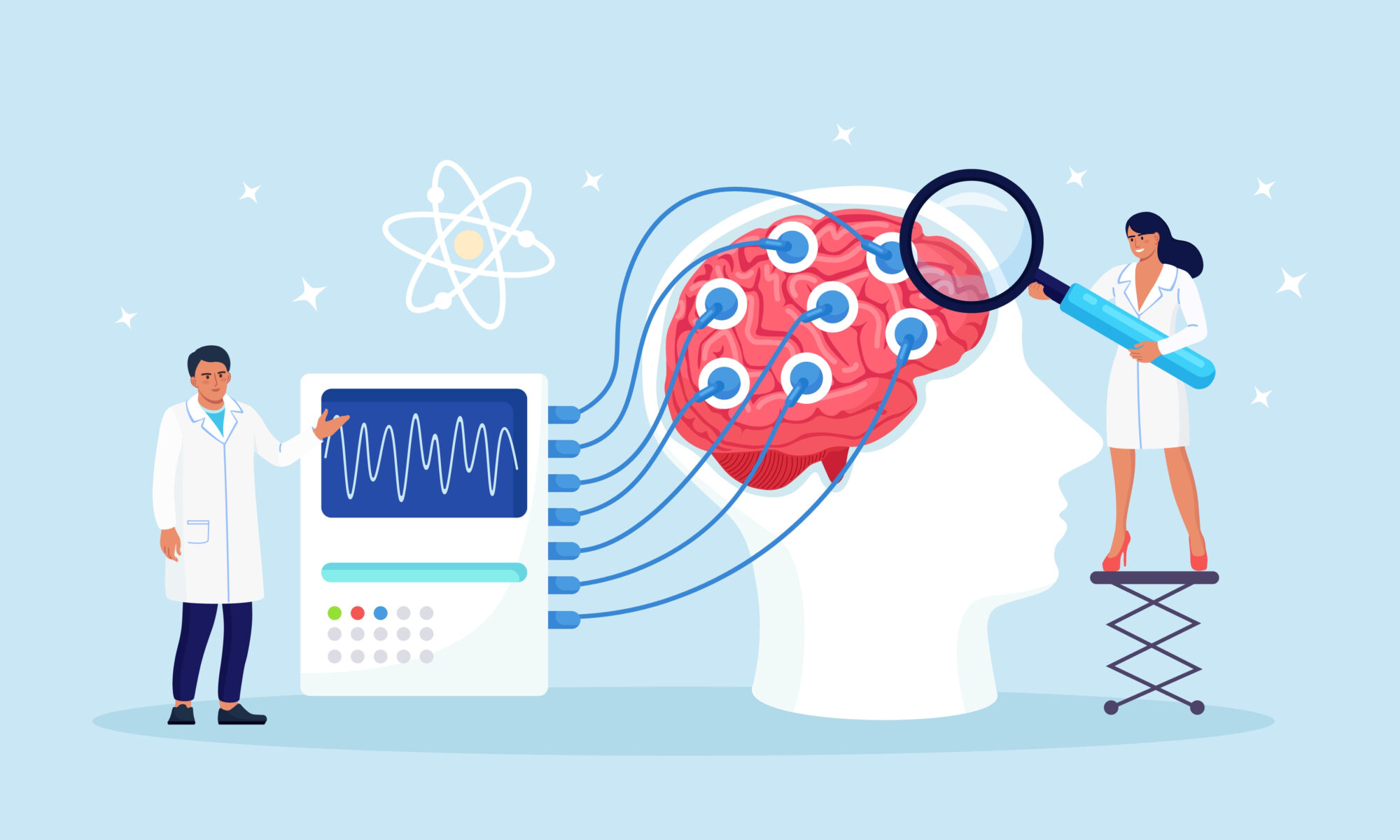
Neuroscience has been developing at an ever-increasing pace in recent years, illuminating the complex mental and emotional processes of the brain. In this context, Electroencephalogram (EEG, brain electrical activity) and functional Magnetic Resonance Imaging (fMRI, brain blood circulation) methods, which allow the measurement of brain activity without causing any pain or damage to the subject, are important scientific tools. Over the last 20 years, thousands of studies conducted with both methods in normal healthy individuals have generated a significant body of knowledge on the biological mechanisms underlying the brain’s processes of attention, perception, learning, emotional arousal and decision-making (cognition). The fields of neuro-economics and neuromarketing are emerging applications of this knowledge.

Both methods have significant advantages over implicit discourse and indirect measurement methods based on eye movements or facial gestures. While implicit discourse and indirect measures often do not yield reliable results due to differences in the capacity of individuals to express their mental processes and are significantly influenced by the interviewer or the interview setting, the underlying neuroscientific measures, which reflect the various stages of the perception process, are independent of such external influences. As such, they offer a new scientific window into understanding consumer behavior and its underlying causes.

However, the main point to be considered when applying the data provided by neuroscience to applied fields such as neuromarketing is that the measurements should be carried out with the seriousness and precision of scientific research.

EEG Measurement Technology

Today, the introduction of devices that measure EEG signals with cheap circuits and that can be easily used by any user, mostly for purposes such as managing game consoles with brain waves, has paved the way for groups without expertise in EEG to operate in the field of neuromarketing with such devices with very low measurement accuracy. However, there are many studies and scientific publications showing that these devices do not provide reliable measurements of EEG signals. Our experience is that the signal-to-noise ratio of these devices does not allow us to obtain findings that we can easily obtain with research/medical grade devices. More importantly, the scores such as engagement, excitement, frustration, etc. that these devices produce from the EEG signal for gaming purposes have no scientific validity. Nevertheless, these scores are used for neuro-marketing purposes.

Furthermore, the EEG signal is easily contaminated by much larger electrical activity from sources such as head muscles, eye movements, etc. Since no algorithm has yet been developed to reliably eliminate such noise automatically, the measurements must be reviewed by a Cognitive Neuroscience expert to remove these artifacts before analysis.

Event-related Brain potentials (ERP)

An important shortcoming/error in the widespread neuromarketing practices is that a scientific measurement requires an experimental design based on a hypothesis. Without any hypothesis/experiment design to obtain reliable information about the brain, the results that can be obtained by measuring on-going brain activity (on-going EEG) while a person is making observations similar to those during daily life (e.g. watching an advertising video) have very limited power. Such measurements can only provide a rough indication of a person’s level of alertness, emotional arousal and stress.

On the other hand, by repeating static visual or auditory stimuli derived from EEG and presented within the framework of an experimental design many times and analyzing the EEG signals obtained in temporal relation to them, it is possible to measure the brain’s responses to these stimuli specifically. These measurement techniques are called event-related potentials (ERPs) and event-related oscillations (EROs). These methods enable highly accurate measurements of the brain’s mental processes such as attention, memory storage, retrieval, semantic processing and decision-making in response to specific stimuli. The great success of Cognitive Neuroscience in the last 20 years is based on this measurement methodology.

In order to effectively apply ERP and ERO methods to market research, the marketing question must first be defined in the best possible way, an appropriate experimental design must be developed, measurements must be taken by expert researchers with reliable instruments, noise must be removed, and the results must be interpreted by sophisticated analysis methods. In this context, market researchers and neuroscientists need to work together in close contact.

The most important gains of this method, which is much more comprehensive and laborious than the common approach in practice, can be summarized in the following two points:

The findings are not open to speculation and interpretation, but are presented within the limits of scientific prescription and statistical significance. When it comes to major conceptual steps, such as the development of a new marketing strategy, it enables the reliance on data whose reliability has been rigorously tested.

The range of questions that can be addressed within the framework of in-depth preliminary work with the marketing team is vast. In this context, instead of simply answering a simple question, such as the extent to which an advertising video or package design stimulates a person, which is often open to interpretation, it is possible to answer much more specific conceptual questions, such as what associations the product makes in the consumer’s mind, what is the appropriate brand slogan on which to base a marketing strategy, in what ways the product is perceived to be different from alternative products, and in what way this difference exists.

Kaynak: Prof. Dr. Tamer Demiralp, İstanbul Üniversitesi, İstanbul Tıp Fakültesi, Fizyoloji Anabilim Dalı
Subconscious or Unconscious? S. Freud’s Views of Concepts

Sigmund Freud, known as the founder of psychoanalysis, talks about both structural and topological concepts when explaining the psychic structure of human beings.

According to the topological perspective, the human psychic world consists of consciousness, preconsciousness and unconsciousness. According to Freud, there are primary and secondary processes in the psychic structure. Primary processes represent the unconscious and secondary processes represent the conscious and preconscious. Freud likens this structure of the psychic world to an iceberg. While consciousness represents the part of the iceberg above the water, the unconscious represents the part below the water. Regarding the existence of the unconscious, Freud speaks of the unconscious as necessary and legitimate. The unconscious is necessary because there is a gap between each information in the consciousness and the consciousness is insufficient to fully explain the behavior of both healthy and unhealthy people.

Many of Freud’s books contain his concept of the unconscious and his theory of personality. However, despite such widespread coverage, an ambiguity about Freud is noteworthy. While discussing his views in the Turkish psychology literature, it is possible to come across the concept of “unconscious” in some sources, the concept of “subconscious” instead, and both in others. These differences in usage bring along various questions. Which concept did Freud use originally, the unconscious or the subconscious? When we look at Freud’s works in general, it is clear that the concept is used as unconscious. When we examine the numerous case studies written by Freud between 1905 and 1920, we come across the concept of unconscious in them. However, there is no such unity in Turkish translations. In some works, although the concept is originally translated as “unconscious” in English, it is translated as “subconscious” (bilinçaltı) in Turkish, while in others the concept is translated as “without conscious” (bilinçsiz) and so on. This gives us an idea that there is a problem in Turkish usage that is generally caused by translation.

When one does in-depth research on Freud, it is possible to come across his earlier works, which are little known. For example, Freud has a work titled Quelques Considérations Pour Une Étude Comparative des Paralysies Motrices Organiques et Hystériques (Some Points for a Comparative Study of Organic and Motor Paralysis) published in French in 1893. When we look at this work, we can see that Freud also uses the concept of the subconscious. Freud states the following: “When the impression remains in the unconscious (le subconscient), it becomes impossible to destroy it.” In fact, this is probably the first concept Freud used to refer to non-conscious mental processes. As can be seen, although the concept of the unconscious is found in almost all of his works, it is possible to encounter the concept of subconscious in his early works. In order to clarify the issue, it would be useful to examine, research and read the historical development of the concepts of subconscious and unconscious and Freudian psychology.

As a result, it was seen that Freud used these two concepts in different meanings. We can easily say that Freud was not the first to use and formulate the concept of the unconscious. Freud benefited from the accumulation of thought before him and adapted this concept to his system with a psychological content. It is known that Freud benefited from Janet and his concept of the subconscious during the development of his theory. For this reason, Freud used the concept of subconscious in the early periods. However, our analysis has shown that when it comes to Freudian psychology, the concept that should be used is “unconscious”. It is accepted by many psychologists that it would be wrong to use the concepts of the subconscious and the unconscious interchangeably. In fact, this distinction has been made by Janet and Freud, who are important representatives of both concepts. The concept of the subconscious was seen as a more clinical concept in terms of its compatibility with topographical theory and the fact that it refers to a place below consciousness, and this usage was preferred among neurologists. However, Freud did not approve of this usage because of the risk of confusing consciousness with the psyche and preferred the concept of the unconscious. In works translated into Turkish or written in Turkish, when Freud’s theory is in question, the concept is sometimes used as subconscious. It is seen that this usage is erroneous and that there is a translation error in the translations. However, we can claim that this error is due to a reason. Since the concept of “repression”, one of the most important concepts of psychoanalysis, expresses a downward direction in Turkish, and since repression is from the consciousness to the unconscious, it is quite practical to depict the unconscious in a spatial manner as a space below the consciousness. The concept of the subconscious seems more appropriate to topographical theory. The expression “suppressing the subconscious” is more useful than “suppressing the unconscious”. Although some of the Turkish works use the term “unconscious”, it was observed that the term “subconscious” was preferred when talking about topographic theory or when discussing the concept of repression. When we look at Freud’s older Turkish translations, some of them use ” pushing” instead of “repression”. It is easier to say that some thoughts are pushed from the conscious to the unconscious instead of repressed. Some translations even use the term “stuffing”. If the concept of “pushing” is used instead of the concept of ” repression”, it is likely that the expression “pushing out of consciousness” will be more accepted.

Kaynaklar: Uçar, S., 2019. Psikanalizde Bilinçdışı,  Sevinç, K., 2019.  Freudyen Psikolojide Bilinçaltı ve Bilinçdışı Kavramları Arasındaki Benzerlikler ve Farklılıklar 

Love – Always There & Always with Us

Love is sometimes a phenomenon that we are exposed to, sometimes a complex idea that we find difficult to comprehend, and sometimes an existence that radically changes our lives, a rebirth. In short, love has touched all of our lives in some practical or theoretical way, at least at some point in time. Sometimes we experience love in person, sometimes through the experiences of an unforgettable novel character, or through the bitter verses of poets who have surrendered to love. Indisputably, all of these practical and theoretical experiences of love are extremely valuable and special in their own right. Love is a sublime emotion that every human being experiences and keeps alive in a unique way. While some of us navigate between the thin line of abandonment and being abandoned on the mysterious paths that love takes us on, some of us maintain a lifelong union.

Definitions of Love

The phenomenon of love is based on an extremely complex pattern in which psychological, neurological, social and cultural factors come together and manifest in the individual. One of the main reasons for this complexity is that the definition of love and the way it is experienced varies from individual to individual, and therefore the characteristics that the subject attributes to the object are based on an absolute subjectivity. The main reason for this is the existence of various principles and mechanisms that are constructed in the unconscious at the very basis of the subject’s relations with its objects. The unconscious reality of each individual is unique and completely subjective. On the other hand, love can be basically defined as an individual’s overthinking of another individual and forming a passionate and excessive bond of love towards him/her.

Nevertheless, it should be noted that love has a dual nature. While love is sometimes based on empathy, altruism and compassion, it can also be the direct or indirect cause of phenomena such as murder and suicide by revealing destructive motives in people. For this reason, love is not a simple emotion that can be taken lightly; it is a phenomenon with very serious effects and consequences in individual, social and cultural contexts. Love is at a very special point as it is both a cause and a consequence of human existence. For centuries, many literary figures, philosophers and scientists have devoted themselves to finding the formula, definition and mechanism of love. However, from centuries ago to the present day, no one has been able to agree on an absolute definition of love.

Although love seems to manifest physiologically on a hormonal and neuronal level, it is also a complex phenomenon, especially involving unconscious structuring and internal processes: For this reason, there are as many types of love as there are people in the world. Thus, the phenomenon called love cannot fully include the concepts of absoluteness, objectivity, universality and general validity. Nevertheless, modern branches of science such as neuroanatomy, neurophysiology and neuropharmacology emphasize that the effects and mechanisms of love on the brain and nervous system structure of Homo sapiens can be explained on the basis of physiological elements such as neurotransmitters, synaptic structures, hormones, etc.

In conclusion, the origin of love is based on the attempt to replace the absence and coldness of existence with the other. Love is the art of constructing meaning in a meaningless world. For this reason, the scenarios created by human beings, who are fictional beings, and the figures who play a role in these scenarios vary on the basis of personal history, time, space, etc. Therefore, there is no absolute definition of what is called “love”. Love is a reality that each individual has constructed in their own inner and subjective world. Love is actually something that does not fit into any definition, model or theory, that overflows from one’s self to the other, that cannot be expressed and marked in language, but that will inevitably be expressed in order to reach “that person” somehow, somewhere and at some time. It is outside of logic and description, far away from everyone and everything, it is only that which is in it and remains in it.

CONCLUSION: ‘Love is what is missing and what remains missing’.

Special Note: We would like to thank dear Murathan Demiriş for his permission to publish parts of his Master’s Thesis in this article. Click on the relevant link to access the full thesis.

https://www.researchgate.net/publication/349732112_Eksik_Olan_Ask_Uzerine_Psikanalitik_ve_Felsefi_Bir_Inceleme_-_Murathan_DEMIRIS

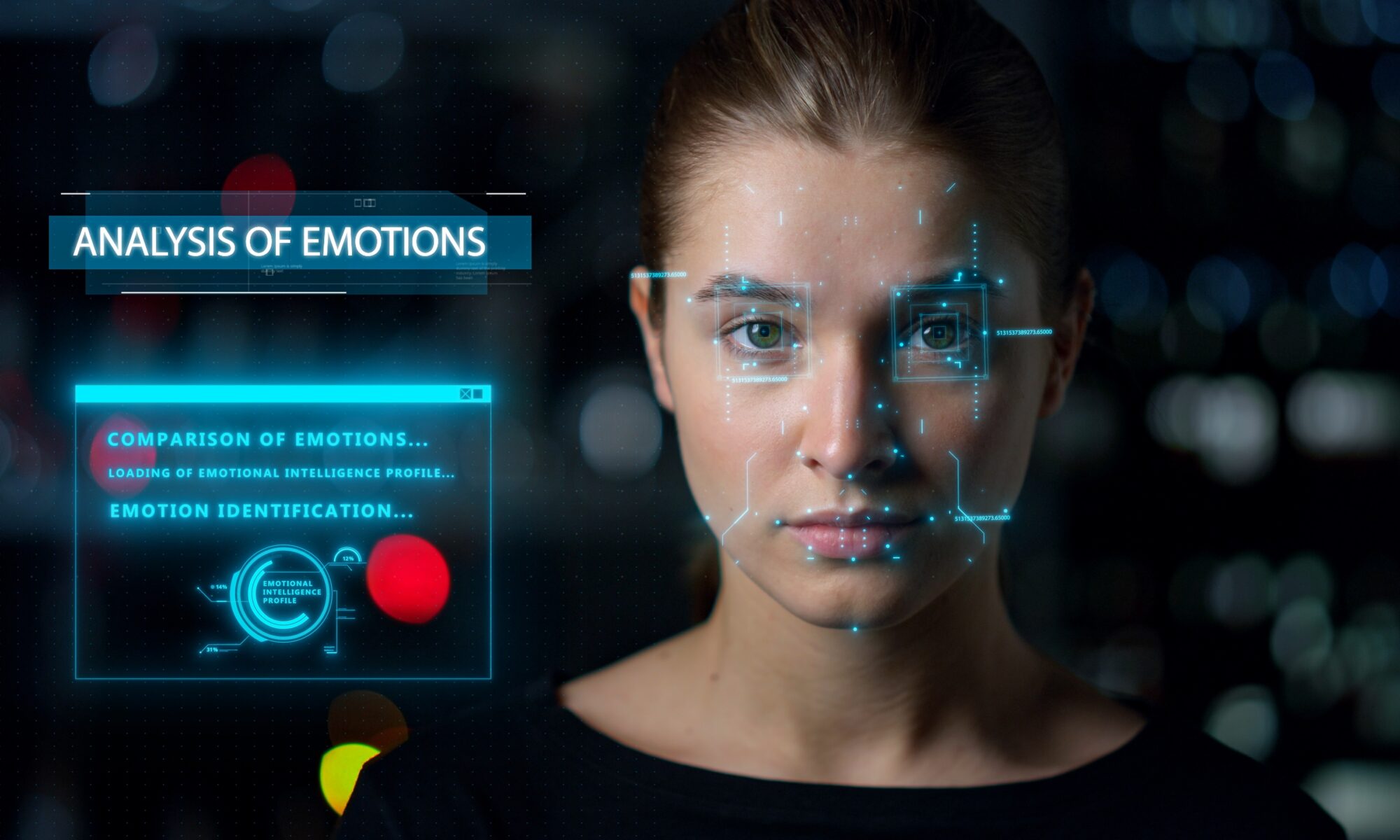
WE EXPOSE THE TRUTH ABOUT ”FACIAL EMOTION STATE” STUDY!

Unfortunately, the facts and myths about the ‘Facial Emotion State’ method, which has come to the forefront among neuromarketing methods in recent years, are confused with one another. As in every field of neuromarketing, there are information and perception inaccuracies in this field, and the method is applied and defined in different ways.

Let’s look at the characteristics of a correct ‘Facial Emotion State’ analysis carried out within the limits of real science;

  • The most striking feature of physical and neurological research is that it can measure the emotional response of consumers to marketing arguments, brands, and products within the limits of scientificity. It is the emotional dimension that drives the behavioural dimension in the communication that brands establish with their customers. A correctly performed Facial Emotion State analysis, which comes into play here, gives the emotional dimension of the brand within the limits of scientificity with 95% reliability rate.
  • In Facial Emotion State analysis, the emotions of people against any stimulus are analysed by reflecting the responses from the central and autonomic nervous systems to the outside with the movements of the facial muscles. It provides enriched perceptions by observing the body’s reactions to instant stimuli and revealing emotions by monitoring facial expressions, which is a means of communication.
  • Participants involved in the analysis are identified by the system and their feelings towards each stimulus are given based on the emotions test.

On the other hand, in an accurate ‘Facial Emotion State’ study performed in conjunction with constant EEG, the body’s reactions to instant stimuli are observed in addition to measuring brain waves, and involuntary emotions are revealed by monitoring facial expressions, which are a means of communication, and more enriched perceptions are obtained. In the Facial Emotion State method, which is performed in conjunction with constant EEG, brain wave activity and the identification of facial expressions are recorded and evaluated synchronically. With this technique, a camera image-based analysis of facial expressions is performed and the basic emotions of the participants such as happiness, sadness, anger, surprise, fear, confusion, and hatred are determined on a millisecond scale. Since EEG receives the responses of the cortex, a match can be made with the responses received from the face. For example, when a person gets angry while watching something, he/she can also express this emotion with a sarcastic smile. Then, if EEG is used, with the precise responses from the brain, it is clear whether this is anger or whether it is really laughter.

We say: “The reliability rates of so-called Face Recognition studies, which are carried out without adhering to the above facts, are low and misleading when only facial muscles are recorded without using individualisation or EEG.”

Mimics and Body Language

We express our thoughts and feelings through our facial expressions and body language as well as through speech. Non-verbal expressions are perhaps as important as the verbal expressions we use in interpersonal communication. When we say mimics and body language, we include hand and arm movements and facial expressions. We always give messages to those around us with these actions and expressions. In fact, we express our emotions in a more real way with our facial expressions and body language rather than our words.

Mankind has come to these days thanks to verbal communication. However, body language, which is a supporter of verbal communication, is sometimes a mere reflection of the facts. Body language is mostly instinctive and consists largely of unconscious actions. Body language is the remnant of our primitive reflexes from the earliest times of humanity, when other creatures were perceived as prey or predators. These reflexes have programmed us to approach stimuli that look like prey and to avoid stimuli that look like predators. Therefore, as soon as we meet, we either warm up to someone or not. It is completely normal to have some impressions about people at first sight, to like some people right away, and to dislike others at all. The brain makes sense of these nonverbal expressions in one-fifth of a second. That’s why we often get some impressions of people at first sight.

This is where the power of neuromarketing comes in. The most striking feature of physical and neurologicalresearch is that it can measure the emotional response of individuals to verbal and visual stimuli within the limits of science. Neuroscience research shows that it is highly likely that we cannot voluntarily express our emotions correctly, even if we want to.

One of the great achievements of neuroscience is measuring emotions from facial expressions. The feelings of the person against any stimulus are measured and analyzed by the reflection of the responses from the Autonomic and Central Nervous System with the movements of the facial muscles.Expression of activation of the amygdala, orbitofrontal cortex, anterior cingulate cortex, and insula is reflected in facial movements.Expression of the analyzed emotions takes place through the amygdala and hippocampal system, while implicit and explicit emotional memory processes information.Implicit emotional memory is information that a person has recorded in the past and formed like a reflex.Explicit memory, on the other hand, is the experiences and information learned by the person himself.

“A man’s acts speak louder than his words.” – Dale Carnegie

Sometimes the eyes complete the sentences that the lips cannot. – Ahmed H. Müftüoğlu

“The meaning in a person’s voice, eyes and behavior is not less than his words.” – François de La Rochefaucauld

What we say is:“When the person’s body language and words contradict, take the body seriously”.

CONCLUSION: When the other person’s body language and words contradict, take the body seriously.

REACH OUT FOR THE RIGHT INFORMATION AND CREATE STRATEGY FOR YOUR BRAND

Brand Research is an approach that sees the consumer as an institution! It means:

  • to listen to and measure the consumer, as it is the consumer who makes the final decision.
  • to look for information that sheds light on what and the reasons why the target audience wants something.
  • to reduce the risk in the matters to be decided.

We, as researchers, constantly ask the same question ‘Why is Research Done’ and answer this question on our own. The essence of the question, that is, the fuel of the research, is information and the purpose is to collect the information in the most accurate way possible. The most important thing on which to focus is to get to work with Research Companies and experts who will use the right method and apply it in the most reliable way. Otherwise, the given time and budget will be wasted. The most dangerous consequence is to have false information. From the brand’s perspective, having no information is better than acting on misinformation.

If the purpose of the research is to ‘create customer loyalty’, then ‘reach out for the emotions’!

“A brand that sticks in your mind is deemed to success. A brand that takes a place in your heart is deemed to gain loyalty.”Scott Talgo, Brand Strategist

Here are the things to do after getting the right information:

  • to analyse the information,
  • to interpret the trends, forecasts, frequency distributions and correlations,
  • to prepare strategies and present them to customers.

Whether traditional methods or neurological and physiological measurements are applied, the purpose of the research is to reach the inner worlds of consumers in order to reveal the role of brand and advertising in the daily life and unconsciousness of consumers.

The vision of research is to ‘measure brand perceptions’.

The main vision of research is to measure brand perceptions and use these perceptions to increase brand values.

“What distinguishes brands is their symbolic value.”Prof. David A. Aaker, Brand Strategist

What research aims is ‘to gain deep insights’.

  • to analyse the brand and consumer relationship
  • to reveal the positive (+) and negative (-) values ​​of the brand in the eyes of the consumer
  • to turn the negative perceptions into positive
  • to encourage teamwork
  • to provide the right psychological environment
  • to use the research results in the future, based on the status analysis.

What research brings to the brand is ‘to create a strategy’.

Where are we?

  • Determining the brand position in the consumer’s mind:
    • Studies about the expectations and usage habits
    • Studies about brand image and positioning

Where should we be?

  • Determining the marketing targets
  • Identifying the communication targets
  • Identifying the target audience
  • Positioning and identifying the brand

How can we get there?

  • Initiating creative studies
  • Developing marketing and communication strategies

“An approximate answer to the right question (which is often ambiguous) is better than a definitive answer to the wrong question (which is often specific).”– John Tukey, Statistician

What Does Neuroscience Have To Do With Marketing?

As a result of increasing competition conditions, the need for differentiation, the need to gain new customers and the activities to retain the customers are pushing businesses to consumer-oriented marketing approaches. In the past, the next generation marketing trends were data-driven marketing, guerrilla marketing, integrated marketing, word of mouth, and viral marketing. But today, the important role of the internet in our lives, the deepening, development and digitalization of research methods, the latest technologies developing in the examination of neuroimaging activities, which have an important role in understanding the consumer, demonstrate that new trends have been added to those mentioned above. These are mobile marketing, digital marketing and neuromarketing. It has been realized over time that conventional marketing methods are insufficient in revealing the real thoughts that pass through the minds of the consumers. Thus, the technological methods of reaching deeper thoughts and behavioural patterns of the consumer have begun to be investigated.

Thanks to the development of technology, the process of people’s decision-making process has become measurable only with neuroscience methods, since it is linked to our neurological and biological systems. However, in order to fully explain the decision-making processes of individuals, other scientific fields such as marketing, psychology, sociology, anthropology, and economics should come together as well as neuroscience. It would be even more beneficial for these disciplines to create a chain of concepts that can be explained on a common denominator.

Historical Development of Neuromarketing

Let’s take a brief look at the historical process of neuromarketing. An American railroad worker loses his frontal lobe after an accident, but he survives. This accident, which causes the worker in question to change his character after a while, causes scientists to turn to neuroscience studies (Sal-man &Perker, 2017). First, neuroscientific research was born with the concern to unravel how people make decisions. In 1985, we see that Antonio Damasio formed the basis of neuromarketing. “Is Descartes’ Mistake the Only Truth of Neuromarketing?” Somatic Marker Theory.

Since 1985, neuroscientific research has been carried out in military research centers and universities, especially in the USA. In the 1990s, Gerald Zaltman announced that he used the fMRI device in market research, and in this way the first technological steps of neuromarketing research were taken. Ale Smidts asks: “Can we use the science of neurology, which is used to better understand people and cure their problems, to understand consumers and offer them better solutions”. In this direction, the concept of neuromarketing, which is a combination of neuroscience and marketing, emerges (Ecertaş, 2010).

Patrick Renvoise’s research on sales, marketing and neuroscience forms the basis of the method called “Selling to the Old Brain”. Read Montague, professor of neuroscience at Baylor College of Medicine, conducted the first neuromarketing study in 2003 and was published under the name “Neuron” in 2004 (Morin, 2011, p.132).

In 2012, Martin Lindstrom conducted a global neuromarketing study that had never been done before. He collected his research findings in the book “Buyology” and presented it to the market. The book was included in the neuromarketing literature and contributed to the writing and research process of many articles.

CONCLUSION: Having more than one product and service in the market makes it difficult for people to make decisions. Marketing people aim to make their products and services more preferable. With this purpose, they aim to simplify and accelerate the purchasing process. For this reason, companies need to act according to what is in the minds of consumers. The definition of neuromarketing, which has entered our lives for this purpose, is the use of techniques in neuroscience to understand the response of the human brain to marketing stimuli. Its main purpose is to better understand and predict the unconscious behavior of consumers. If the slogan “Neuroscientists and Market Researchers Hand in Hand” is adopted, important success stories can be achieved in many neuromarketing studies.

THINGS YOU MUST KNOW ABOUT EEG

EEG yolculuğu

In order to measure consumer behaviour and brand perceptions of customers; the marketing experts, brand managers, advertisers, and market researchers have recently begin to prefer Neuroscience Research, which pinpoints the underlying emotional and rational factors that influence the brain’s decision-making process. Neuromarketing, which is within the scope of Social Neuroscience, reveals how the brains of people as customers, and ultimately THE PEOPLE AS SHOPPERS work in decision of shopping by feeding on science and marketing.

Currently, one of the most important technologies in the hands of Neuromarketing is Electroencephalogram (EEG). EEG, the electrical activity of the cerebral cortex, allows the measurement of brain activity without causing any pain or damage to the subject. There are 2 different methods specified in the literature for measurements made with EEG. These are:

  • Standard EEG (On-Going)
  • Event-Related Potentials (ERP)

Standard EEG

The results that can be obtained by measuring ongoing brain activity using the standard EEG method, without making any hypothesis or experimental design in order to obtain reliable information about the brain, have a limited efficacy.

Event-Related Potentials (ERP)

It is possible to measure the responses of the brain to these stimuli in a specific manner by repeatedly providing static visual or auditory stimuli derived from EEG that presented within an experimental design, and analysing the EEG signals obtained in a temporal correlation. These measurement techniques are called Event-Related Potentials (ERP) and Event-Related Oscillations (ERO).These methods makes it possible to measure with high accuracy the mental processes of the brain such as attention to specific stimuli, recording in the memory, recalling from the memory, semantic processing, and decision making.

Differences and Superiorities of the Event-Related Potentials (ERP) Method

  • Name: The measurement made with plain EEG without using the ERP method is called the Standard EEG Study.
  • Scientificness: The standard EEG study is only a measurement. However, the ERP method is the most scientific method in the cognitive field.
  • Reliability: The rate of reliability is over 95% in measurements made with ERP.
  • Hypothesising: ERP is a study of hypotheses, in which some hypotheses are created before the study in order to answer the questions asked by the customer about the stimulus to be tested (i.e. brand concept, packaging, logo etc.)
  • Researche: There are many type of research in neuromarketing. Studies such as “Concept Test”, “Image Research”, “Brand Creation and Development”, “Animatic or Storyboard Pre-Tests” can be carried out with ERP.
  • Methodology: The methods of standard EEG and ERP study are completely different from one another. Please contact NeuroMark for more information.
  • Memorability and Semantic Correspondance: In the Event-Related Potentials methodology, the scores of ‘Semantic Correspondance’ and ‘Memorability’ are determined in addition to the ‘Attention’, ‘Mental Effort’ and Positive and Negative Emotion Level’ in the Standard EEG. Semantic Correspodance brings forward the real association between the attributes/qualities that are thought to be associated with the brand.

IN CONCLUSION:This measurement methodology is the mainstay of the great success of Cognitive Neuroscience in the last 20 years, which we can only ask to the brain specific questions about cognition with ERP. Only Neuro-Mark applies this very efficacious and advanced methodology in Turkey.

Turkish Coffee – Always Here, Always With Us

türk kahvesi

Grown and consumed for more than 600 years in Anatolia, the Turkish coffee is a very special flavour in our lives. It is a traditional beverage, to which perhaps the utmost meaning, the utmost affection and the outmost stories are attributed. We have revisited the Turkish coffee during the snow holiday last week, and now let’s remember it with all its root and its deep down meaning and the stories it creates in our brain, and most importantly, let’s enjoy this short passage about it…

No matter how much we point out the physical properties of coffee, such as its stimulating and energizing effects, the coffee also has an incontrovertible sentimental effect. Drinking coffee forges a daily ritual for us, representing the ‘special moment’ that we spare for ourselves during the rush of the day. The coffee is a ‘magical potion’ that creates an atmosphere of ‘pleasure’ and adds intimacy to the shared moment among people. The coffee, with its unique fragrance, is easily distinguished from other beverages, strengthening the relationship that people establish with it.

Turkish coffee is a quick ‘getaway’ in the day – a ‘Freedom’

A teensy ‘getaway or break’ takes us out of our daily routine, relaxing and comforting us. While it provides comfort and relaxation, it also makes us feel ‘free’. Therefore, coffee is always associated with moments and places of pleasure.

Turkish coffee is an ‘excuse’ to make time for ourselves… a ‘Reward’

Turkish coffee is actually an ‘excuse’ to make us feel happy and free. Coffee is a way of rewarding, of gratifying that we grant for various excuses. It is the ability to pamper ourselves, even for a short time in life, a way to say “Well done to me!” after the work we have just finished. Women have a slightly more tendency to reward themselves with Turkish coffee.

A perfect excuse for ‘Chitchat’

Turkish coffee is mostly associated with ‘chitchat’ and ‘being together with friends’. Chatting and Turkish coffee are inseparable. When we want to have a chat with a friend, neighbor or a loved one, we habitually say “let’s have coffee” or “let’s go for a cup of coffee”.

Turkish coffee is served in small coffee cups, and can be drunk in a short time, which is adept for the whirlwind of metropolitan life that allow for small talks only. Turkish coffee is the indispensable accompaniment when it comes to having a chat with colleagues in break times, with neighbours in the morning, with loved ones in the evening.

Turkish coffee is a ‘special’ drink, a means of ‘Sharing’ with the most intimate friends

Turkish coffee means friendship and intimacy. It is a representation of ‘sharing’. Since it is a special drink, we do not drink it with just anyone, but with the closest of friends, or with neighbours. Turkish coffee contains ‘elitism’ at its core. Even when it makes us tranquil if we drink it alone, the pleasure reaches the peak if we drink it together with friends.

Friendship and Intimacy comes together in coffee

Inviting friends over for a cup of coffee is due to the need to have a friendly conversation or to be engaged in small talk. In this sense, it is the indispensable drink of short meetings and ‘gossip’ among best of friends.

Turkish coffee represents a Tradition and a Culture

Turkish coffee is not an ordinary beverage. Coffee represents a ‘culture’. Having a profound effect on the lifestyle in Turkey, Turkish coffee plays a central role as a sign of hospitality and friendship.

The role of Turkish coffee is indisputable, especially when entertaining guests, asking a girl’s hand in marriage, and visiting relatives in feasts. Turkish coffee represents a ‘ceremony’ on these occasions.

Neither believe in, nor be deprived of ‘Fortune Telling’

Seeing the fortune from the coffee grounds or having your fortune read is an important ritual of Turkish coffee culture. Man or woman, young or old, coffee fortune-telling is identified with Turkish coffee. When we drink Turkish coffee from the coffee cup, we close the cup directly over the saucer. We do it automatically even when we do not want fortune telling from the coffee grounds.

Coffee = ‘Pleasure, Peace, Relaxation, Sharing, Freedom’

Special Note: We would like to thank Dr Nihal Bursa for granting us with the permission to publish some parts of our research prepared for her called “TURKISH COFFEE PERCEPTION and CUP CULTURE” in this article.