The Impact of Changing Attention Span in the Brain on Market Research

Technology is widely used in many aspects of life today, and digital devices and services such as computers, smartphones, tablets, social media platforms, etc. contain elements that can constantly demand our attention. However, some negative effects can also be observed due to the overuse or misuse of technology.

Decreased Patience: Technology offers quick results and instant access. This can lead to people having less patience and a reduced ability to focus on activities that require longer periods of effort.

Distraction: Constantly interacting with smartphones, social media and other digital content can negatively affect attention span and reduce concentration.

Information Overload: The internet and digital devices can provide people with too much information, which can overload their brains and negatively affect attention and memory.

Changes in attention span may differ between individuals and these changes may also occur due to technology usage. Maintaining a balance in the use of technology, taking regular breaks and working with apps that improve focus can help reduce the negative effects on attention span.

This has an impact in all areas of life. People’s reduced attention span in tests that have been created in market research can increase the likelihood of inattentive responses. The effectiveness and accuracy of surveys is related to respondents’ attention levels and their ability to respond diligently. During busy time periods, being under stress and variations in attention span can make it difficult for respondents to focus. As a result, they may respond carelessly in surveys.

Careless responding in surveys can affect the reliability and validity of survey results. Attention span is also an important issue for marketers because capturing and maintaining consumers’ attention is critical for increasing sales of products and services.

Neuromarketing methods have an advantage in terms of attention span. Because it focuses on the participant’s biology, not their declaration. It obtains data to understand participant responses by measuring brain activity and evaluating neural responses using brain scanning technologies and behavioral metrics. In this way, it can better understand participants’ unconscious level responses and draw more accurate conclusions. This can reduce the impact of misleading or conscious responses in marketing research that relies on participant self-reports.

Reference:

Psychologist Merve Altındağ

The Aesthetic Brain: What is the Essence of Our Perception of Aesthetics?

In human history, the evolution of intelligence is a major milestone. The evolutionary process has resulted in humans to develop the ability to think, to acquire the ability of abstract thinking and to create complex cultural structures. However, the evolution of intelligence is not limited to the development of practical skills and problem-solving abilities. The role of creative expressions such as music, painting and arts is of great importance in human sociocultural evolution. Human awareness of the phenomenon of aesthetics has also developed along with these fields.

Aesthetics encompasses people’s ability to evaluate and appreciate many things such as beauty, works of art, natural landscapes, music, literature and other visual or auditory experiences. Aesthetic perception guides individuals’ preferences and evaluations of beauty. When something is considered aesthetically pleasing, it means that it has a positive impact on an individual’s emotional, cognitive and even physical responses. This may include visual harmony, symmetry, proportions, colors, patterns, sounds, rhythms and other visual or auditory features in balance and harmony. Aesthetic perception varies from person to person and may also change socially over time.

The processing of aesthetic perceptions in the brain is a complex process and several different brain regions play a role in this process. These are;

Orbitofrontal Cortex: It is a brain region associated with emotional evaluation and reward processing. It plays an important role in evaluating emotional responses such as pleasantness or pleasure in aesthetic experiences. This region can influence the subjective aspects of beauty perception.

Visual Cortex: This is the brain region where visual information is processed. It analyzes information from the eyes and transforms it into shapes, colors, patterns and other visual features. In this way, it contributes to the perception of elements such as visual harmony, symmetry, proportions and patterns in aesthetic experiences.

Hippocampus: An area of the brain involved in memory and memory processing. The hippocampus can play an important role in the formation and recall of memories associated with beautiful things. Emotional connections to aesthetic things and previous experiences can be shaped through memory.

In the light of all this information, there are some common aesthetic perceptions for humanity, but it should be noted that there is not completely universal or fixed standard of beauty. It can be observed that certain aesthetic traits are generally accepted among people.

CONCLUSION: There is a strong relationship between neuromarketing and perception of aesthetics. In order for neuromarketers to better understand consumers and create effective marketing strategies, it will be beneficial to measure aesthetic perception through emotions and take steps towards this. Understanding the impact of aesthetics on consumer behavior is important for strengthening brand image and enabling consumers to establish a more positive connection with the brand.

Reference

Psychologist Merve Altındağ

M. Bhupal, et al. Aesthetics and Evolution: What We Find Beautiful and Why (May 10, 2022). Retrieved July 13, 2023. Retrieved from: https://evrimagaci.org/s/11654

7 Steps on How to Implement EMONET

What is EMONET?

It is a brain-based neuromarketing method. Unlike traditional research methods, it provides precise results within a 95% confidence interval.

With EMONET technology, people’s emotions against any stimulus are measured by brain responses from the central and autonomic nervous systems. These responses are as follows:

– Blood flow in the forehead due to the central nervous system,

– The heart beats faster or slower depending on the autonomic nervous system and the dilation or contraction of the pupils of the eyes in response to the heartbeat,

– Deep brain structures project emotions through facial muscle movements.

How to Develop a Research Design for Facial Emotional State Analysis (EMONET)?

– The brand is listened to in order to understand the deepest distress by receiving a brief from the customer.

– The findings to be obtained are determined.

– Hypotheses, i.e. information to be tested in the study, are created.

– The names and number of emotions to be used in the study are determined.

How is the Sample Determined?

– Participants are found by NeuroMark according to the nature of the project and the brand target audience.

– If no breakdown is requested in the study, a sample group of 8-10 people is sufficient. A minimum of 8 people is required for each breakdown.

– Since each project is a unique study, the sample size and the number of breakdowns are mutually determined according to the target of the project.

How is the Participants’ Preparation and Informing Realized?

– Participants’ e-mail addresses and contact information are obtained.

– Usernames and passwords are determined specifically for each participant.

– Participants are informed by e-mail and phone on the implementation day.

– Introductions are made. Rules and stages are explained. Their questions are answered.

How is the Measurement Process Implemented?

– The study is carried out in the natural environment of the participants through their computer or phone cameras.

– They are logged into the system with the link and username-password sent during the information process.

– First, Personalized Emotion Analysis is performed. In other words, the emotions of the person are measured from their own situation.

– Then, the visual or auditory stimuli that the brand wants to be measured are shown to the participant.

– During these screenings, the participant is followed by the device camera and data is collected for facial emotion analysis.

How is the Data Analysis Process Performed?

– Scores belonging to different emotional states are processed by our analysis team and analyzed to reveal statistical significance.

– Emotion analysis is performed and graphs and videos are created. These values are shared with our communication and reporting team.

How is reporting and presentation done?

– Emotional state findings from our neuroscience team are analyzed by our communication and reporting team, and statistically significant scores are reported.

– A Powerpoint presentation is prepared and the resulting neuromarketing findings are strengthened by combining them with the results obtained through in-depth interviews.

– The results are supported with parameters, graphics and videos and presented to the brand.

The Importance of Body Sensations and Measurements in Marketing

Body sensations describe different sensory experiences in our body. Humans use sight, smell, taste, touch and hearing to perceive life and the environment. These perceptions allow us to understand and respond to environmental stimuli.

Body sensations may vary between individuals. Each person’s experience and perception of the senses is unique. For example, some people may react more sensitively to a loud sound, while others may react more intensely. Today, body sensations are actively measured in many areas of everyday life to provide quality information.

At the University of Turku in Finland, a study was conducted with the measurement of the sense of sight. The researchers focused on how watching visual art affects our emotions. A total of 1,186 people from different countries participated in the study and were asked to evaluate the emotions evoked by more than 300 works of art. The results of the study;

Professor Lauri Nummenmaa: “The bodily sensations evoked by the art contributed to the emotions, and the stronger the body’s response to the artwork, the stronger the emotions the person experienced.” The findings revealed how aesthetic experience can affect the body’s emotional response.

Conducting research by measuring body sensations gives us high reliability. Again, measurements facilitate many important issues from scientific research to marketing methods. In the world of marketing, understanding an individual’s sensory experiences and finding appropriate solutions for specific needs is one of the cornerstones, while body sensation measurement technology can provide data on the perceptions and sensations of each individual’s unique experience.

As a result, measuring body sensations can be an important tool in the world of marketing. Scientists have been rigorous in this regard. However, it is of great importance to use these measurements in accordance with ethical guidelines and to protect the privacy rights of the participants. Ignoring these sensitivities may cause problems in the long run. For this reason, it is useful to work with researchers who take ethical principles into consideration.

Reference:

Psychologist Merve Altındağ

“Bodilyfeelingsandaestheticexperience of art” byLauriNummenmaa et al. Cognition&Emotion

WE EXPOSE THE TRUTH ABOUT ”FACIAL EMOTION STATE” STUDY!

Unfortunately, the facts and myths about the ‘Facial Emotion State’ method, which has come to the forefront among neuromarketing methods in recent years, are confused with one another. As in every field of neuromarketing, there are information and perception inaccuracies in this field, and the method is applied and defined in different ways.

Let’s look at the characteristics of a correct ‘Facial Emotion State’ analysis carried out within the limits of real science;

  • The most striking feature of physical and neurological research is that it can measure the emotional response of consumers to marketing arguments, brands, and products within the limits of scientificity. It is the emotional dimension that drives the behavioural dimension in the communication that brands establish with their customers. A correctly performed Facial Emotion State analysis, which comes into play here, gives the emotional dimension of the brand within the limits of scientificity with 95% reliability rate.
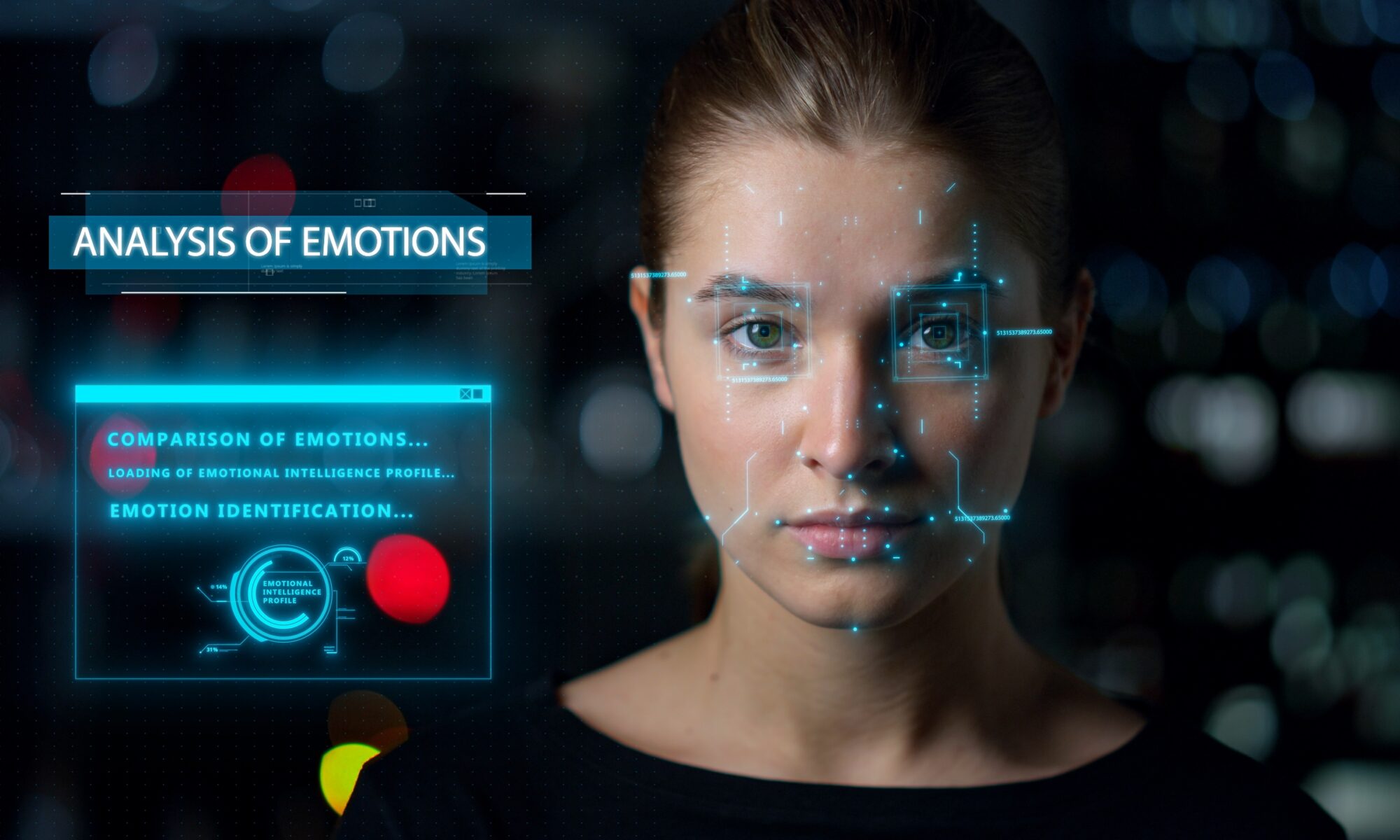
  • In Facial Emotion State analysis, the emotions of people against any stimulus are analysed by reflecting the responses from the central and autonomic nervous systems to the outside with the movements of the facial muscles. It provides enriched perceptions by observing the body’s reactions to instant stimuli and revealing emotions by monitoring facial expressions, which is a means of communication.
  • Participants involved in the analysis are identified by the system and their feelings towards each stimulus are given based on the emotions test.

On the other hand, in an accurate ‘Facial Emotion State’ study performed in conjunction with constant EEG, the body’s reactions to instant stimuli are observed in addition to measuring brain waves, and involuntary emotions are revealed by monitoring facial expressions, which are a means of communication, and more enriched perceptions are obtained. In the Facial Emotion State method, which is performed in conjunction with constant EEG, brain wave activity and the identification of facial expressions are recorded and evaluated synchronically. With this technique, a camera image-based analysis of facial expressions is performed and the basic emotions of the participants such as happiness, sadness, anger, surprise, fear, confusion, and hatred are determined on a millisecond scale. Since EEG receives the responses of the cortex, a match can be made with the responses received from the face. For example, when a person gets angry while watching something, he/she can also express this emotion with a sarcastic smile. Then, if EEG is used, with the precise responses from the brain, it is clear whether this is anger or whether it is really laughter.

We say: “The reliability rates of so-called Face Recognition studies, which are carried out without adhering to the above facts, are low and misleading when only facial muscles are recorded without using individualisation or EEG.”

What Does Neuroscience Have To Do With Marketing?

As a result of increasing competition conditions, the need for differentiation, the need to gain new customers and the activities to retain the customers are pushing businesses to consumer-oriented marketing approaches. In the past, the next generation marketing trends were data-driven marketing, guerrilla marketing, integrated marketing, word of mouth, and viral marketing. But today, the important role of the internet in our lives, the deepening, development and digitalization of research methods, the latest technologies developing in the examination of neuroimaging activities, which have an important role in understanding the consumer, demonstrate that new trends have been added to those mentioned above. These are mobile marketing, digital marketing and neuromarketing. It has been realized over time that conventional marketing methods are insufficient in revealing the real thoughts that pass through the minds of the consumers. Thus, the technological methods of reaching deeper thoughts and behavioural patterns of the consumer have begun to be investigated.

Thanks to the development of technology, the process of people’s decision-making process has become measurable only with neuroscience methods, since it is linked to our neurological and biological systems. However, in order to fully explain the decision-making processes of individuals, other scientific fields such as marketing, psychology, sociology, anthropology, and economics should come together as well as neuroscience. It would be even more beneficial for these disciplines to create a chain of concepts that can be explained on a common denominator.

Historical Development of Neuromarketing

Let’s take a brief look at the historical process of neuromarketing. An American railroad worker loses his frontal lobe after an accident, but he survives. This accident, which causes the worker in question to change his character after a while, causes scientists to turn to neuroscience studies (Sal-man &Perker, 2017). First, neuroscientific research was born with the concern to unravel how people make decisions. In 1985, we see that Antonio Damasio formed the basis of neuromarketing. “Is Descartes’ Mistake the Only Truth of Neuromarketing?” Somatic Marker Theory.

Since 1985, neuroscientific research has been carried out in military research centers and universities, especially in the USA. In the 1990s, Gerald Zaltman announced that he used the fMRI device in market research, and in this way the first technological steps of neuromarketing research were taken. Ale Smidts asks: “Can we use the science of neurology, which is used to better understand people and cure their problems, to understand consumers and offer them better solutions”. In this direction, the concept of neuromarketing, which is a combination of neuroscience and marketing, emerges (Ecertaş, 2010).

Patrick Renvoise’s research on sales, marketing and neuroscience forms the basis of the method called “Selling to the Old Brain”. Read Montague, professor of neuroscience at Baylor College of Medicine, conducted the first neuromarketing study in 2003 and was published under the name “Neuron” in 2004 (Morin, 2011, p.132).

In 2012, Martin Lindstrom conducted a global neuromarketing study that had never been done before. He collected his research findings in the book “Buyology” and presented it to the market. The book was included in the neuromarketing literature and contributed to the writing and research process of many articles.

CONCLUSION: Having more than one product and service in the market makes it difficult for people to make decisions. Marketing people aim to make their products and services more preferable. With this purpose, they aim to simplify and accelerate the purchasing process. For this reason, companies need to act according to what is in the minds of consumers. The definition of neuromarketing, which has entered our lives for this purpose, is the use of techniques in neuroscience to understand the response of the human brain to marketing stimuli. Its main purpose is to better understand and predict the unconscious behavior of consumers. If the slogan “Neuroscientists and Market Researchers Hand in Hand” is adopted, important success stories can be achieved in many neuromarketing studies.