
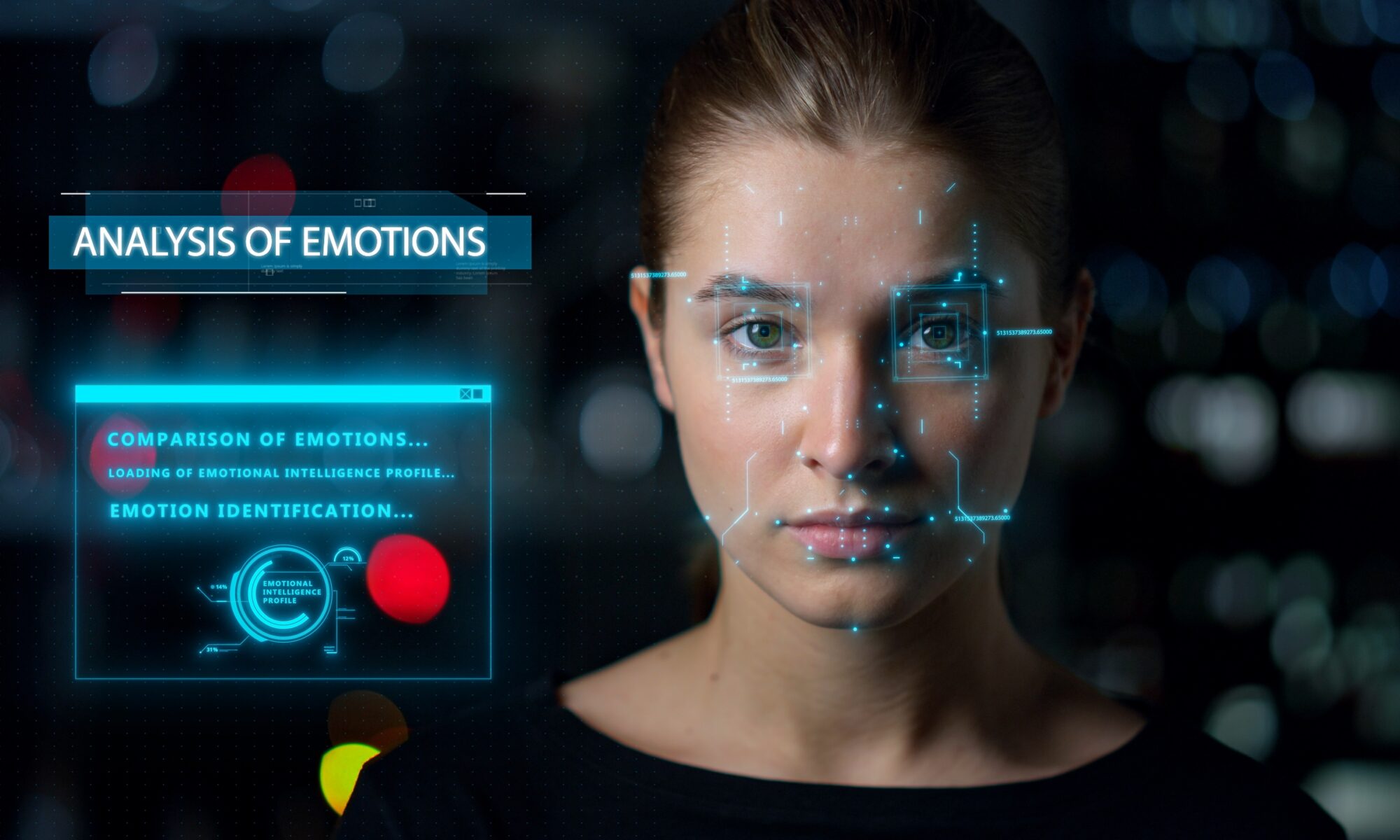
WE EXPOSE THE TRUTH ABOUT ”FACIAL EMOTION STATE” STUDY!

Unfortunately, the facts and myths about the ‘Facial Emotion State’ method, which has come to the forefront among neuromarketing methods in recent years, are confused with one another. As in every field of neuromarketing, there are information and perception inaccuracies in this field, and the method is applied and defined in different ways.

Let’s look at the characteristics of a correct ‘Facial Emotion State’ analysis carried out within the limits of real science;

  • The most striking feature of physical and neurological research is that it can measure the emotional response of consumers to marketing arguments, brands, and products within the limits of scientificity. It is the emotional dimension that drives the behavioural dimension in the communication that brands establish with their customers. A correctly performed Facial Emotion State analysis, which comes into play here, gives the emotional dimension of the brand within the limits of scientificity with 95% reliability rate.
  • In Facial Emotion State analysis, the emotions of people against any stimulus are analysed by reflecting the responses from the central and autonomic nervous systems to the outside with the movements of the facial muscles. It provides enriched perceptions by observing the body’s reactions to instant stimuli and revealing emotions by monitoring facial expressions, which is a means of communication.
  • Participants involved in the analysis are identified by the system and their feelings towards each stimulus are given based on the emotions test.

On the other hand, in an accurate ‘Facial Emotion State’ study performed in conjunction with constant EEG, the body’s reactions to instant stimuli are observed in addition to measuring brain waves, and involuntary emotions are revealed by monitoring facial expressions, which are a means of communication, and more enriched perceptions are obtained. In the Facial Emotion State method, which is performed in conjunction with constant EEG, brain wave activity and the identification of facial expressions are recorded and evaluated synchronically. With this technique, a camera image-based analysis of facial expressions is performed and the basic emotions of the participants such as happiness, sadness, anger, surprise, fear, confusion, and hatred are determined on a millisecond scale. Since EEG receives the responses of the cortex, a match can be made with the responses received from the face. For example, when a person gets angry while watching something, he/she can also express this emotion with a sarcastic smile. Then, if EEG is used, with the precise responses from the brain, it is clear whether this is anger or whether it is really laughter.

We say: “The reliability rates of so-called Face Recognition studies, which are carried out without adhering to the above facts, are low and misleading when only facial muscles are recorded without using individualisation or EEG.”

REACH OUT FOR THE RIGHT INFORMATION AND CREATE STRATEGY FOR YOUR BRAND

Brand Research is an approach that sees the consumer as an institution! It means:

  • to listen to and measure the consumer, as it is the consumer who makes the final decision.
  • to look for information that sheds light on what and the reasons why the target audience wants something.
  • to reduce the risk in the matters to be decided.

We, as researchers, constantly ask the same question ‘Why is Research Done’ and answer this question on our own. The essence of the question, that is, the fuel of the research, is information and the purpose is to collect the information in the most accurate way possible. The most important thing on which to focus is to get to work with Research Companies and experts who will use the right method and apply it in the most reliable way. Otherwise, the given time and budget will be wasted. The most dangerous consequence is to have false information. From the brand’s perspective, having no information is better than acting on misinformation.

If the purpose of the research is to ‘create customer loyalty’, then ‘reach out for the emotions’!

“A brand that sticks in your mind is deemed to success. A brand that takes a place in your heart is deemed to gain loyalty.”Scott Talgo, Brand Strategist

Here are the things to do after getting the right information:

  • to analyse the information,
  • to interpret the trends, forecasts, frequency distributions and correlations,
  • to prepare strategies and present them to customers.

Whether traditional methods or neurological and physiological measurements are applied, the purpose of the research is to reach the inner worlds of consumers in order to reveal the role of brand and advertising in the daily life and unconsciousness of consumers.

The vision of research is to ‘measure brand perceptions’.

The main vision of research is to measure brand perceptions and use these perceptions to increase brand values.

“What distinguishes brands is their symbolic value.”Prof. David A. Aaker, Brand Strategist

What research aims is ‘to gain deep insights’.

  • to analyse the brand and consumer relationship
  • to reveal the positive (+) and negative (-) values ​​of the brand in the eyes of the consumer
  • to turn the negative perceptions into positive
  • to encourage teamwork
  • to provide the right psychological environment
  • to use the research results in the future, based on the status analysis.

What research brings to the brand is ‘to create a strategy’.

Where are we?

  • Determining the brand position in the consumer’s mind:
    • Studies about the expectations and usage habits
    • Studies about brand image and positioning

Where should we be?

  • Determining the marketing targets
  • Identifying the communication targets
  • Identifying the target audience
  • Positioning and identifying the brand

How can we get there?

  • Initiating creative studies
  • Developing marketing and communication strategies

“An approximate answer to the right question (which is often ambiguous) is better than a definitive answer to the wrong question (which is often specific).”– John Tukey, Statistician