
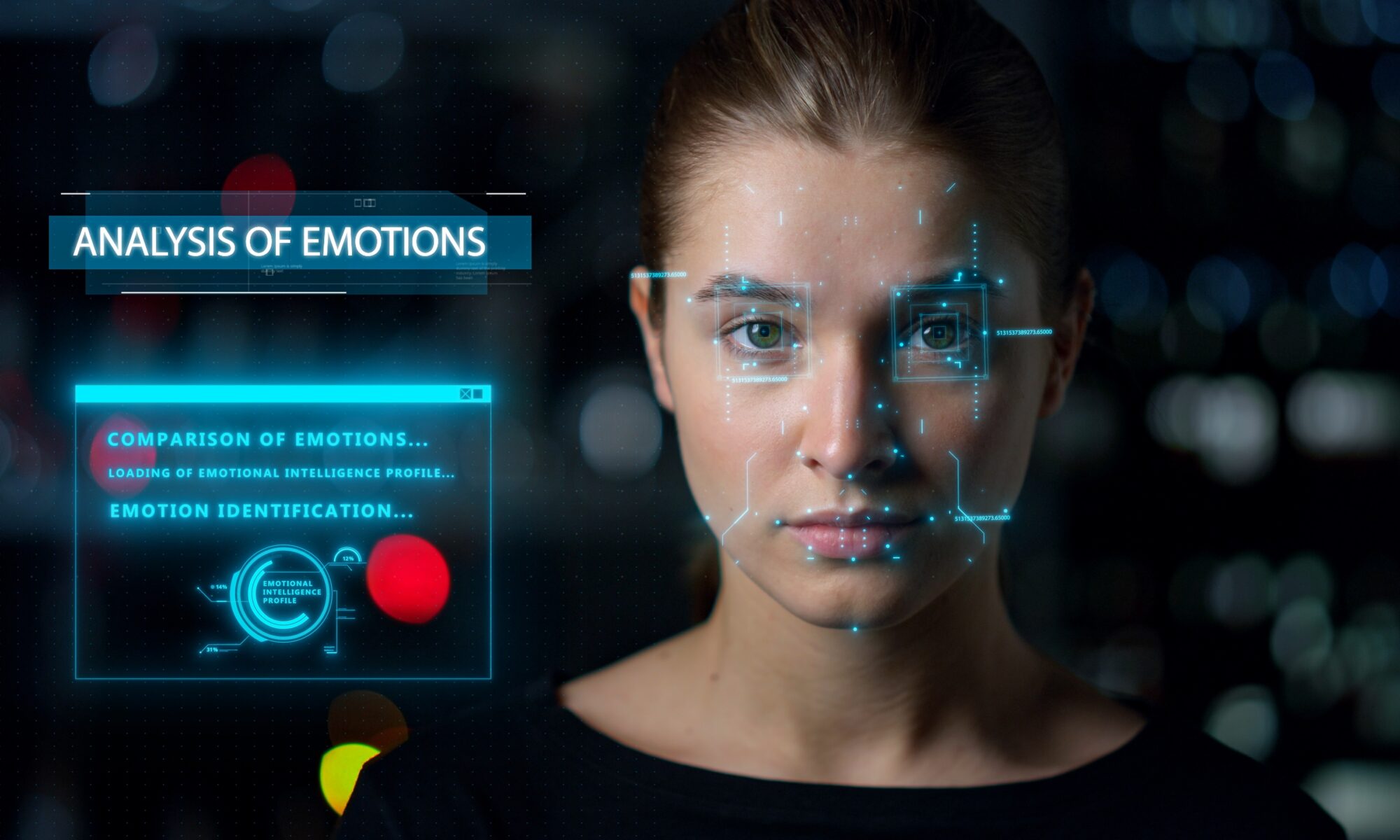
WE EXPOSE THE TRUTH ABOUT ”FACIAL EMOTION STATE” STUDY!

Unfortunately, the facts and myths about the ‘Facial Emotion State’ method, which has come to the forefront among neuromarketing methods in recent years, are confused with one another. As in every field of neuromarketing, there are information and perception inaccuracies in this field, and the method is applied and defined in different ways.

Let’s look at the characteristics of a correct ‘Facial Emotion State’ analysis carried out within the limits of real science;

  • The most striking feature of physical and neurological research is that it can measure the emotional response of consumers to marketing arguments, brands, and products within the limits of scientificity. It is the emotional dimension that drives the behavioural dimension in the communication that brands establish with their customers. A correctly performed Facial Emotion State analysis, which comes into play here, gives the emotional dimension of the brand within the limits of scientificity with 95% reliability rate.
  • In Facial Emotion State analysis, the emotions of people against any stimulus are analysed by reflecting the responses from the central and autonomic nervous systems to the outside with the movements of the facial muscles. It provides enriched perceptions by observing the body’s reactions to instant stimuli and revealing emotions by monitoring facial expressions, which is a means of communication.
  • Participants involved in the analysis are identified by the system and their feelings towards each stimulus are given based on the emotions test.

On the other hand, in an accurate ‘Facial Emotion State’ study performed in conjunction with constant EEG, the body’s reactions to instant stimuli are observed in addition to measuring brain waves, and involuntary emotions are revealed by monitoring facial expressions, which are a means of communication, and more enriched perceptions are obtained. In the Facial Emotion State method, which is performed in conjunction with constant EEG, brain wave activity and the identification of facial expressions are recorded and evaluated synchronically. With this technique, a camera image-based analysis of facial expressions is performed and the basic emotions of the participants such as happiness, sadness, anger, surprise, fear, confusion, and hatred are determined on a millisecond scale. Since EEG receives the responses of the cortex, a match can be made with the responses received from the face. For example, when a person gets angry while watching something, he/she can also express this emotion with a sarcastic smile. Then, if EEG is used, with the precise responses from the brain, it is clear whether this is anger or whether it is really laughter.

We say: “The reliability rates of so-called Face Recognition studies, which are carried out without adhering to the above facts, are low and misleading when only facial muscles are recorded without using individualisation or EEG.”

Mimics and Body Language

We express our thoughts and feelings through our facial expressions and body language as well as through speech. Non-verbal expressions are perhaps as important as the verbal expressions we use in interpersonal communication. When we say mimics and body language, we include hand and arm movements and facial expressions. We always give messages to those around us with these actions and expressions. In fact, we express our emotions in a more real way with our facial expressions and body language rather than our words.

Mankind has come to these days thanks to verbal communication. However, body language, which is a supporter of verbal communication, is sometimes a mere reflection of the facts. Body language is mostly instinctive and consists largely of unconscious actions. Body language is the remnant of our primitive reflexes from the earliest times of humanity, when other creatures were perceived as prey or predators. These reflexes have programmed us to approach stimuli that look like prey and to avoid stimuli that look like predators. Therefore, as soon as we meet, we either warm up to someone or not. It is completely normal to have some impressions about people at first sight, to like some people right away, and to dislike others at all. The brain makes sense of these nonverbal expressions in one-fifth of a second. That’s why we often get some impressions of people at first sight.

This is where the power of neuromarketing comes in. The most striking feature of physical and neurologicalresearch is that it can measure the emotional response of individuals to verbal and visual stimuli within the limits of science. Neuroscience research shows that it is highly likely that we cannot voluntarily express our emotions correctly, even if we want to.

One of the great achievements of neuroscience is measuring emotions from facial expressions. The feelings of the person against any stimulus are measured and analyzed by the reflection of the responses from the Autonomic and Central Nervous System with the movements of the facial muscles.Expression of activation of the amygdala, orbitofrontal cortex, anterior cingulate cortex, and insula is reflected in facial movements.Expression of the analyzed emotions takes place through the amygdala and hippocampal system, while implicit and explicit emotional memory processes information.Implicit emotional memory is information that a person has recorded in the past and formed like a reflex.Explicit memory, on the other hand, is the experiences and information learned by the person himself.

“A man’s acts speak louder than his words.” – Dale Carnegie

Sometimes the eyes complete the sentences that the lips cannot. – Ahmed H. Müftüoğlu

“The meaning in a person’s voice, eyes and behavior is not less than his words.” – François de La Rochefaucauld

What we say is:“When the person’s body language and words contradict, take the body seriously”.

CONCLUSION: When the other person’s body language and words contradict, take the body seriously.