
Neuro-Architecture

Aesthetics has left a deep mark on every aspect of human life and played a central role in the development of cultures and civilizations. Since ancient times, people have developed different ways to shape the pursuit of beauty and the understanding of aesthetics. For example, in ancient Greece, the concept of ideal beauty was created using mathematical principles such as the golden ratio in sculpture and architecture. These principles reflect a search for both physical and spiritual balance.

Today, aesthetics has gained a new dimension through technology and media. The understanding of aesthetics has evolved in fields such as digital arts, fashion and interior design, and different cultural aesthetic norms have come together in a globalizing world. With the rise of social media, the aesthetic preferences of individuals in their daily lives have turned into a kind of performance art.

Neuro architecture is a discipline that examines how the physical environment around us can change our brain and thus our behavior. The main goal of neuro architecture is not only to ensure that spaces are functional, but also to address the emotional and mental needs of users. Therefore, the user experience is of paramount importance in neuro architecture; individuals’ interactions with spaces and the emotions these spaces evoke in them are at the center of the design process. This approach offers great potential to create more humane, user-centered and livable environments in future building designs.

To achieve these goals, neuroarchitecture draws on a variety of disciplines, combining data from fields such as psychology, neuroscience, architecture and ergonomics. This discipline studies the effects on the brain of elements such as natural light, color palettes, material choices, acoustic arrangements and indoor plants. For example, a properly designed office environment can increase workers’ attention levels, stimulate creativity and improve work efficiency. At the same time, architectural designs with right angles or sharp edges can create more tension over time, while other spaces with rectangular forms can feel less enclosed than square plans. Similarly, neuroarchitectural applications in hospitals can accelerate patients’ recovery processes and improve overall health outcomes.

In summary, when neuromarketing techniques and neuro-architectural goals are combined, modern spaces can be built in accordance with human aesthetics.

Reference: Psychologist Merve Altındağ

Tektaş, E. (2023). Mimarlık İçin Nörobilim: Nörobilim ve Mimarlık│ Tarihi│ Arasındaki İlişki Üzerine Genel Bir Değerlendirme: Mimarlık İçin Nörobilim. Tasarim+ Kuram19(140. Yıl), 138-158.

Küçük, S. G., & Yüceer, H. Nöromimari Tasarım Kriterleri.

Product Design and Neuromarketing

Product design brings together knowledge from different disciplines, including engineering, marketing, user experience (UX) and industrial design. The tools and methodologies used can vary depending on the complexity of the design, the dynamics of the industry and the desired outcome. Product design combines creative thinking with engineering knowledge and aims for both customer satisfaction and commercial success. The aim of product design is to direct and create consumer demand in targeted markets and to have a high market share in a competitive position. It should aim to create high-tech products equipped with innovative and creative features.

In the long and arduous process of product design, there are elements that need to be considered. First of all, during the research and analysis process, the needs and desires of the target audience are analyzed. Then the first designs are made with idea development. Selected ideas are elaborated and digital or physical prototypes are created. At this stage, it is tested whether the design is aesthetic, functional and manufacturable. During the testing process, neuromarketing tools can test the impact of the product on the consumer with scientific and safe methods. Especially user-oriented designs can be analyzed emotionally.

Neuromarketing analyzes the impact of sensory elements such as color, shape, sound and touch on consumers. Careful selection of these elements in product design can strengthen the user’s perception and emotional connection to the product. Consumers’ decision-making processes about the product can be analyzed with neuromarketing techniques. This can help to understand which features or design elements of a product trigger a purchase decision. This information plays an important role in determining which features should be emphasized in product design. In addition, data can be obtained on how long the product or brand lasts in users’ memory. This information can be used to create more memorable and attention-grabbing designs.

Prototype testing in the early stages is important to verify the functionality and usability of the product. These tests both improve the quality of the design and prevent costly mistakes.

Testing the design in terms of user experience in a certain group of consumers before production can increase the success rate of the product.

Reference: Psychologist Merve Altındağ

Erdoğan Yılmaz, E. Ürün Tasarımında Heyecan Ölçümü: Konsept Otomobillere Karşı Duyulan Heyecanlar Üzerine Bir Çalışma (Doctoral dissertation, Fen Bilimleri Enstitüsü).

ERDEN, O., AYKURT, F., ELDEM, C., & ŞAHİN, C. Developing STEM Activities with Design-Focused Thinking Approach.

The Relationship Between Social Media and Neuromarketing

Social media marketing is all the activities that brands carry out to promote their products and services and increase their sales by connecting with their target audiences through social media platforms. In the digitalized age, developing an effective marketing strategy for brands and businesses is a constantly changing process. Social media has become one of the most critical elements of this change.

These platforms play an important role in increasing interaction by allowing brands to communicate directly with their target audiences. Social media marketing is the work carried out to deliver products, services or content to target audiences on social media platforms. These efforts aim to increase brand awareness, boost sales and strengthen customer loyalty. This marketing method, which has an interactive nature, helps brands establish direct communication with their customers and strengthen the bond between them.

Social media platforms are considered highly effective tools for neuromarketing. Neuromarketing is a marketing field that seeks to understand consumers’ unconscious reactions and decision-making processes. It is based on analyzing people’s emotional and cognitive responses using brainwaves, eye movements, skin reactions and other physiological measurements. Content creators can use neuromarketing to understand the behavior of their followers. Social media in particular provides a medium where users can share their emotional reactions instantly. Likes, comments and shares show how users react to a piece of content. By analyzing this data, neuromarketing can determine which types of content generate more engagement. Social media platforms use neuromarketing to make ads and content interact more effectively with users. For example, the colors, sound or visual elements of a particular ad can be designed to have a stronger impact on viewers’ brains. This increases the recall and impact of ads. Again, video duration and speed are related to attention, which is an important focus of neuromarketing. Neuromarketing also has tools and techniques for measuring and reporting attention.

As a result, content, advertisements and studies produced on social media platforms can provide a strong support to attract users’ attention, increase interaction rates and offer more personalized content with neuromarketing techniques.

Reference: Psychologist Merve Altındağ

GÜRSES, Ö. Ü. F. (2022). E-PAZARYERLERİNİN SOSYAL MEDYADA DİJİTAL İÇERİK PAZARLAMASI PERFORMANSLARI: SOSYAL METRİKLERE DAYALI BİR ETKİLEŞİM ANALİZİ. Pazarla-Ma Teoriden Pratiğe, 67.

Kaygusuz, N. A. (2023). Nöropazarlama ve Yapay Zekâ İlişkisinin Tüketici Davranışları Üzerindeki Etkisine Yönelik Kavramsal Bir Model Önerisi. Journal of Academic Social Science Studies16(95).

Personalized Neuromarketing (II)

This week, we will explain the importance of personalized neuromarketing and how it increases the reliability rate of the findings obtained as a result of measurement.

Traditional qualitative and quantitative research over the years, psychology-supported studies, anthropological observations and especially neuromarketing studies carried out in recent years show that ‘the communication that brands establish with their customers has an emotional dimension, and the emotional dimension creates behavioral dimension and loyalty over time’.

Neuromarketing is a research field that chooses to recognize consumers through their emotions, brain waves, heartbeats and pupils. The most striking feature of physical and neurological research, which forms the basis of neuromarketing studies, is that the emotional response of consumers to the brand’s image, products and services is personalized and determined with high reliability rates within the limits of science.

Electroencephalography (EEG) conducted with Event Related Potentials (ERP), one of the technologies widely used in neuromarketing, is the response of the central nervous system. It is a technology that measures how much electrical activity is in the brain. EEG measures the positions of brain waves in positive, negative and neutral emotion areas in response to the stimuli presented. In other words, it is measured in which emotion field a person is in in response to any stimulus presented to them. However, emotions cannot be named in this technology.


NeuroMark’s EMONET technology, on the other hand, scientifically measures consumer emotions in response to the stimuli shown and listened to in a personalized manner within 95% reliability limits. In physiological and neurological measurements, participants should not be thrown into the same pot. Because human beings are biological beings and each person’s body values differ, personalized measurement gives more accurate findings/results. Accurate findings/results, in turn, enable brands to develop more accurate strategies, segment their consumers more accurately, and thus have more new and loyal customers.


Personalized neuromarketing studies enable brands to establish personalized communication with their customers. It is clear that brands that know the reactions and emotions of their customers to the product or service they offer will have a great advantage in this regard. In a life where people lose their distinctiveness and forget who they are, it is certain that they are in great need of personalized communication.

Especially in recent years, with personalized neuromarketing measurement methods, it is possible for each customer to feel special and to create customer satisfaction by purchasing appropriate services or products.

Simin Demiriş

Personalized Neuromarketing

Personalization means offering services and products based on individuals’ specific needs and preferences. As an important component of marketing, personalization allows for tailored offers for each customer. In this way, customer satisfaction can be increased, conversion rates can be increased and more effective marketing campaigns can be carried out. Every customer has different interests and tastes. Personalization allows customers to be directed to the right service or product by analyzing their wishes on a large scale. Personalization provides many advantages for both consumers and companies, and a marketing strategy should be created with a detailed analysis.

One of the ways to succeed in personalization is to examine the process in three main elements.

Context: What information do we have about our customers and their current situation? How can this data be matched with the right content?

Content: What kind of offers, promotions, products or combinations of content can we offer to a specific person?

Outcomes: What does the customer want? What kind of success are we aiming for as a brand? How can we align these goals to ensure success for both parties? Can we leverage the right combination of content and context to get these insights? How can we measure the results to ensure we are achieving our goals? By asking questions like these, personalization can be successful.

In the relationship between neuromarketing and personalization, as we know, neuromarketing analyzes the emotional impact of advertisements and product presentations to determine which elements create stronger emotional responses in consumers. Personalization, on the other hand, aims to build a stronger bond and create customer loyalty by offering content and offers that appeal to consumers emotionally.

Again, neuromarketing determines which visuals, colors, messages and sounds are more effective on consumers. In personalization, this information is used to provide the most appropriate content and messages for each consumer segment. For example, a certain visual combination or design may be more appealing to a particular consumer group.

As a result, the integration of these two areas allows for a better understanding of consumer expectations and needs, enabling the development of more satisfying and effective marketing strategies.

Reference: Psychologist Merve Altındağ

Şen, Ş., Önal, A., & Alaybeyoğlu, A. ASP .NET 2.0’da Kişiselleştirme Kavramı ve Bir kişiselleştirme Uygulaması.

E-Commerce and Neuromarketing

Today, it has become almost impossible to trade without digital technologies. The spread of the digital world and the concept of “e-commerce”, which is one of the biggest advantages of the internet and accepted by the masses, has become an indispensable part of trade and our daily lives. The digitalization process in commercial sectors has progressed much faster than expected. The digital world, which covers a wide range from product and service production to payment methods, accompanies us in every aspect of our lives.

E-commerce has multiple components. Various payment systems are used for the secure realization of e-commerce transactions. These systems include credit cards, digital wallets (PayPal, Apple Pay), bank transfers and other digital payment methods. They are virtual versions of a physical store. Consumers can browse, order and pay for products through these stores. Effective digital marketing strategies are essential for the success of e-commerce. Techniques such as SEO (Search Engine Optimization), SEM (Search Engine Marketing), social media marketing, email marketing and content marketing are used.

Especially at the point of digital marketing, neuromarketing can facilitate e-commerce. Neuromarketing is defined as the measurement of neural and physiological signals to gain insight into customers’ decisions, preferences and motivations.

By analyzing how users navigate a website and which elements attract their attention, neuromarketing ensures that web design is user-friendly and effective. This can increase conversion rates. Again, neuromarketing techniques can help understand how consumers react to product pages, advertisements and the shopping experience in general.

Developing personalized marketing strategies based on consumers’ individual preferences and emotional responses can increase customer loyalty and boost sales. How products are presented, priced and packaged can influence consumers’ purchasing decisions. Neuromarketing can help optimize these processes.

Reference: Psychologist Merve Altındağ

Marangoz, M. (2011). Girişimciler için sınırsız ticaret: E-ticaret.

KANTARCI, Ö., Özalp, M., Sezginsoy, C., ÖZAŞKINLI, O., & Cavlak, C. (2017). Dijitalleşen dünyada ekonominin itici gücü: E-ticaret. Tüsiad Yayını.

How Does Our Gender Affect Our Purchase Decisions?

In modern marketing understanding, the factors that influence consumer buying behavior are considered under four main categories: cultural, personal, social and psychological. These factors play a central role in understanding consumer behavior and shaping marketing strategies. Consumer behavior is influenced by a number of individual and non-individual factors. Individual factors include needs, motives, perceptions, attitudes, experiences, self-concept and values. Marketing managers use psychological methods to understand and evaluate consumers’ emotional responses to products and services and the motivations behind their purchasing decisions. The gender factor has both a psychological, biological and sociological basis. In this blog post, we will compare the male and female brain.

First of all, female consumers tend to be highly brand loyal and relationship-oriented. With the trust they have in the brand, they pass on their own experiences with positive opinions from friends, relatives and other relatives. Research on the relationship between gender and clothing has shown that girls are more interested in clothes and brands than boys. In many societies, women are more interested in beauty, appearance and fashion than men.

Women generally do more product research and tend to compare prices. Men in particular were found to dislike shopping more than women, to move around faster in stores, to look around more quickly and not to pay attention to products they are not interested in. In Cüceloğlu’s study, it was stated that women enjoy walking around slowly in stores, make comparisons between products, give importance to product experience and pay attention to salespeople during the product purchase process. In addition, it was observed that women buy the products they plan to buy decisively and are satisfied with shopping.

Women tend to shop with more information from sources such as social media and online reviews. Men usually shop based on the knowledge they already have about a particular product and do less research. Emotional attachment can also play an important role in men’s buying behavior. Emotional factors can come into play, especially when buying products related to their hobbies or interests. Men often take a quick and direct approach to shopping. They tend to buy as soon as they find the product they are targeting.

As a result, it is important for brands to conduct marketing activities according to the brains and behaviors of men and women. Today, with neuromarketing tools, such differences can be easily detected and the behavior, attitudes and emotions of consumers can be objectively analyzed.

Reference: Psychologist Merve Altındağ

Çetin, K. (2018). SATIN ALMA DAVRANIŞLARINDA KADINLARIN GİYSİ MARKASI TERCİHLERİNİ ETKİLEYEN FAKTÖRLER. Uluslararası Turizm Ekonomi ve İşletme Bilimleri Dergisi2(2), 354-366.

Villi, B., & Kayabaşı, A. (2013). Kozmetik ürünlerde kadınların dürtüsel satın alma davranışlarını etkileyen faktörlerin analizi.

Generational Purchasing Trends

Scientific innovations, technological advances, economic developments, social events and political changes in the world we live in affect people’s lifestyles and cultures. These factors significantly affect the shaping of individuals’ lives, their adaptation to the social environment, their communication preferences, emotions, feelings and shopping behaviors, and create different eras. Various phenomena and events that occur in each generation (different social and economic opportunities and challenges, changing uses of technology, different social perceptions) cause generations to have different lifestyles and make different choices; each generation grows and acts according to the realities of its time period.

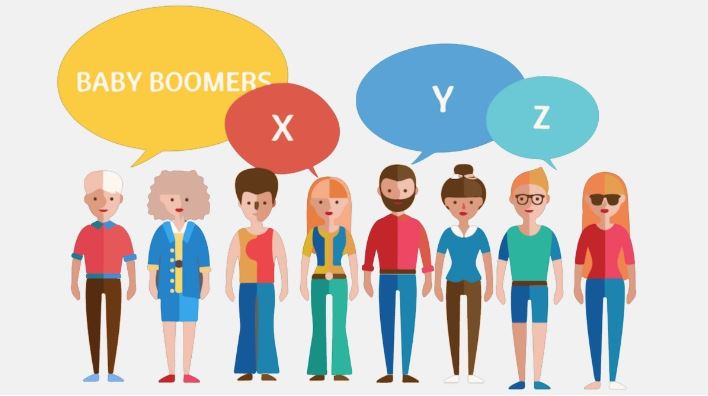
Discussing a topic on generational differences and examining different ideas are among the trends today. In this blog post, we will focus on the differences in purchasing behavior between generations. First, we will start by defining generations. Generations refer to groups of people who were born in a certain period and grew up in similar socio-economic and cultural conditions. Each generation is influenced by the period they live in and the major changes in areas such as technology, economy and politics.

Generation X (1965-1980) grew up with economic uncertainties and social changes. They generally have a pragmatic and flexible approach. They are competent in both analog and digital worlds. They are good at adapting to technology.

It can be defined as a generation that makes less hedonic purchases. This generation has a tendency to buy “need-oriented” and “long-use”. Generation X generally prefers long-lasting and quality products. This is due to the fact that they grew up in times of economic uncertainty. Since they grew up under the impact of economic crises, it is important for them to get their money’s worth. They look for a good price-performance ratio. Again, this generation prefers to shop from brands they are loyal to, because trust and familiarity are important to them. Generation Y (Millennials) includes individuals born between 1981 and 1996. They grew up with the rise of the internet and digital technologies. They are children of globalization and the information age. They value innovation, diversity and social responsibility. They prefer to do meaningful work and invest in experiences. Since they grew up surrounded by technology, they are very prone to online shopping. Since social media use is widespread, social media influencers and friends have a great influence on their shopping decisions. They prefer to invest in experiences rather than material goods. Travel, events and unique experiences are important to them. Their brand loyalty may be low, but they support socially and environmentally responsible brands. Generation Z (born in 1997 and later), as a generation that grew up in a fully digital age, has distinct characteristics in their purchasing behavior. They value speed, instant feedback and personalization. Since they were born and raised with technology, they prefer to shop on digital and mobile platforms. They are very active on social media and take influencers’ advice into account. Fast results and easy access are very important to them. They expect instant feedback and fast delivery. They are very interested in technological innovations and innovative products. They follow the latest trends. They like to interact with brands and feel a sense of community. They care about brands’ values and stories.

It is very important to recognize generations in their purchasing tendencies and to make brands, products and advertisements according to their expectations. Analyzing generational experiences objectively is another issue that needs to be considered. Here, neuromarketing tools can help provide objective and detailed information to analyze intergenerational differences and attitudes.

Reference: Psychologist Merve Altındağ

Dölekoğlu, C. Ö., & Çelik, O. (2018). Y kuşağı tüketicilerin gıda satın alma davranışı. Kahramanmaraş Sütçü İmam Üniversitesi Tarım ve Doğa Dergisi21, 55-66.

Consumers’ Basic Emotions

As humans, we can say that there is an emotion behind almost all of our behavior. Especially if we consider that our emotions are our automatic responses to stimuli, we make decisions on autopilot.

Neurotransmitters released from billions of cells in our brain carry chemical messages that affect our emotions, hormones, heart and other organs. In the lowest layer of the brain is the “reptilian brain”, the center of reflexes and instinctive behavior. In the top layer is the “new mammalian brain” (neo-cortex), considered the center of thought and reason. In the middle layer is a small center called the “limbic brain”. The limbic brain consists of the hypothalamus and small neural nuclei. In addition to being the seat of emotions, this part also contains the centers of motivation and the management of major vital functions (hunger, thirst, aggression, sexuality). So emotions are related to the area of the brain that controls memory formation, emotional response and behavior regulation.

It is a well-known fact that emotions play an important role in consumer decision-making. From an evolutionary perspective, emotions have evolved to help us make good decisions. Consumers have basic emotions about a product or brand. These are emotions such as Happiness, Trust, Fear, Anger, Desire, Rage. Consumers gravitate towards products and services that evoke feelings of happiness and satisfaction. Again, trust in brands and products increases consumer loyalty. Desire for the product or service can trigger the purchase decision. It can damage the brand by leading to consumer complaints and negative experiences. Fear can create a sense of urgency, leading consumers to make quick decisions. Finally, pride is a consumer’s sense of satisfaction and confidence in using a product or service.

Emotions can be used effectively in marketing to build brand loyalty, create a positive brand image and increase customer satisfaction. Using emotions in the right way will naturally increase your conversion rates because it allows you to engage your customers and build strong bonds with them. This, in turn, supports them to be more enthusiastic in their buying behavior.

Reference: Psychologist Merve Altındağ

Türedi, S. (2007). Duyguların kadınların alışveriş davranışlarındaki rolü (Master’s thesis, Sakarya Universitesi (Turkey)).

Ç. M. Bakırcı. Hayatın Kimyası: Farklı Kimyasal Kombinasyonları Hissettiğimiz Duyguları Nasıl Etkiliyor?. (9 Şubat 2013). Alındığı Tarih: 25 Ekim 2022.

Karaman, D. (2021). TÜKETİCİ SATIN ALMA KARAR SÜRECİNDE ETKİLİ OLAN DUYGULAR VE NEDENLERİN KUŞAKLAR KAPSAMINDA İNCELENMESİ. Pamukkale Üniversitesi Sosyal Bilimler Enstitüsü Dergisi, (45), 107-119.