
The Impact of Social Media Influencers on Consumer Emotions

Nowadays, social media platforms, which are an important socializing space for people, are no longer a part of everyday life, but have become everyday life itself. Individuals promote their personalities through their social media profiles. Especially the number of followers and likes has become an important criterion for gaining respectability. Therefore, users with more followers find it easier to reach large audiences and create influence. Now let’s define the influencer world…

Influencer means a person who influences. It also refers to people who practice a type of marketing known as Influencer Marketing. People who have a large following on social media platforms, who can influence the behavior of this audience and thus change the purchasing decisions of their followers are called influencers.

The influence of influencers on consumers is huge and growing. People value the advice of influencers they find trustworthy, sincere and engaging. When promoting a particular product or brand, a good influencer naturally acts as if they are using the product and offers their followers their real experiences. This can lead followers to develop a more positive view of products and brands.

“In the Influencer Marketing Report, brands’ collaborations with influencers are analyzed in three categories: paid, in exchange for products and invitations to events. Advertisers can collaborate with influencers on a “paid” basis, such as a certain number of posts or payment for each post. In addition, brands can send free branded products to influencers as part of their advertising campaign and encourage influencers to share content about these products. In addition, they can invite the influencer to an event organized by the brand and invite them to post about the event for a fee or voluntarily. In addition to these collaborations, brands can also pursue different collaboration strategies. These strategies are shaped by the brand’s objectives and can be categorized into three categories: brand ambassadorship, product placement and event interpretation. A brand ambassador is a person who represents the brand’s identity for a fee within the framework of a long-term relationship.”

The fact that influencers share their lives and emotions with social media users enables users to create an emotional bond. Users support influencers in any negative situation related to influencers. Most users may also consume because of the emotional bond they have established with the influencer rather than the product. Again, women have purchased products promoted by influencers on Instagram more than men in the last year. This shows that advertising activities for women on Instagram may be more effective than for men.

Reference: Psychologist Merve Altındağ

KIRAN, S., YILMAZ, C., & İlkim, E. M. R. E. (2019). INSTAGRAM’DAKİ INFLUENCER’LARIN TAKİPÇİLER ÜZERİNDEKİ ETKİSİ. Uluslararası Yönetim Bilişim Sistemleri ve Bilgisayar Bilimleri Dergisi, 3(2), 100-111.

Erdoğan, H., & Özcan, B. M. (2020). Influencer pazarlaması kullanımının tüketicilerin satın alma niyetine etkisi: Instagram influencerları üzerine bir araştırma. İşletme Araştırmaları Dergisi, 12(4), 3813-3827.


Online Shopping and Consumer Perception

The spread of technological developments in all areas of our lives makes our daily routines faster and more effective. We no longer have to physically go to a store to meet our needs. Thanks to online shopping, we can easily obtain the products we want. This situation provides great convenience. Because the wide range of products makes it more possible to find an option to meet all kinds of needs. With the recent efforts of online shopping sites to become “super apps”, we can find products in many different categories such as grocery shopping, electronic products, clothing and many more on the same platform. This helps us avoid both physical and mental fatigue and saves time. We can now meet all these needs with a few clicks.

Another advantage offered by online shopping applications and sites is the big discounts. These discounts make consumers more cognitively satisfied and the feeling of a discount or a freebie can release hormones of happiness and pleasure. This, in turn, leads consumers to have positive feelings towards online shopping brands that offer such innovations and deals. It creates emotional bonds such as loyalty and commitment.

Consumers often try to find the best price by comparing prices from various sellers. In addition, online shopping sites often offer discounts and campaigns. Again, the comment section on online shopping sites allows people to access other people’s experiences. This allows consumers to learn more about the product before they buy. In a sense, it is a critical detail for online brands to give importance to the comment section on their sites and applications in terms of user experience. Especially in terms of both design and the way comments are presented, it is extremely important that the comment section appeals to the emotions of consumers. Considering that both positive and negative comments will be made here, the brand may need to work on the comment section.

When we examine consumers’ online shopping behavior emotionally;

For many people, shopping is a pleasant activity. Online shopping can increase this pleasure as it offers consumers the opportunity to shop while sitting comfortably at home. Buying a new product or finding a desired item can give people a sense of satisfaction. Online shopping can provide this satisfaction quickly. Online shopping gives consumers freedom of choice and a sense of control. Consumers have more control over finding the products they want at the time and price range they want. Every emotion that people feel towards the brand can increase brand loyalty.

Reference: Psychologist Merve Altındağ

Uygun, M., Özçifçi, V., & Divanoğlu, S. U. (2011). Tüketicilerin online alışveriş davranışını etkileyen faktörler. Organizasyon ve Yönetim Bilimleri Dergisi, 3(2), 373-385.

DANIŞMAZ, A. T. (2020). Covıd-19 salgınının tüketicilerin online alışveriş tercihine etkisi. Sosyal Bilimler Araştırma Dergisi, 9(2), 83-90.

Emotions Affecting Consumer’s Purchase Decision

While in the past emotions have been studied in depth in the fields of psychology, philosophy and sociology, in the last 20 years they have become an important focus in understanding human behavior thanks to significant advances in disciplines such as brain sciences, behavioral economics and game theory. The transformation in this field has provided a new perspective on understanding human behavior and emphasized the role of emotions. Marketing science has also been affected by these developments and has become the focus of many researchers.

Emotional factors that influence consumers’ purchasing decisions are an important focus for marketers. Brands strive to understand consumers’ emotional needs and make them emotionally connected to them. Emotions have a significant impact on consumers’ attitudes, product evaluations, decisions and satisfaction. In addition, emotions play a major role in evaluating consumption experiences, sometimes even as a consequence of a consumption experience. Emotions are automatic responses based on pre-coded generalizations. They make quick and automatic judgments about the world based on pre-formed judgments stored in the unconscious, which can lead to psychosomatic reactions.

According to Montelongo, individuals’ motives and reasons for emotional buying are diverse. Some emotions are particularly prominent in buying behavior. These are

Excitement: Another factor that can create emotional buying motives in customers is the excitement that arises with the launch or production of new products that reflect the latest technology-based style and fashion sense and that can change existing products. However, a brand constantly coming out with a new product may shake the consumer’s sense of trust. Security: It is one of the most prominent emotional reasons for purchasing certain products, especially in industries such as electronic devices and transportation. In such industries, emotional buying can be encouraged by emphasizing the safety and reliability features of the products. Fear: Different customers may have concerns about different products at different times, so efforts to address these concerns can trigger emotional purchase motivation. For example, the fear that some products will be unavailable for a long time if they are not purchased can evoke an emotional purchase in customers.

Consumers’ current mood can also affect their consumption behavior. Consumers with positive emotions tend to keep their product selection short, while consumers with negative emotions tend to gather more information about the product (Chen et al., 2015). Consumers experience negative emotions when they consume the products they need, while those who cannot access or consume the product they need experience negative emotions such as tension and disappointment (Bagozzi et al., 1999).

Reference: Psychologist Merve Altındağ

KARAMAN, D. (2021). TÜKETİCİ SATIN ALMA KARAR SÜRECİNDE ETKİLİ OLAN DUYGULAR VE NEDENLERİN KUŞAKLAR KAPSAMINDA İNCELENMESİ. Pamukkale Üniversitesi Sosyal Bilimler Enstitüsü Dergisi(45), 107-119. https://doi.org/10.30794/pausbed.784589

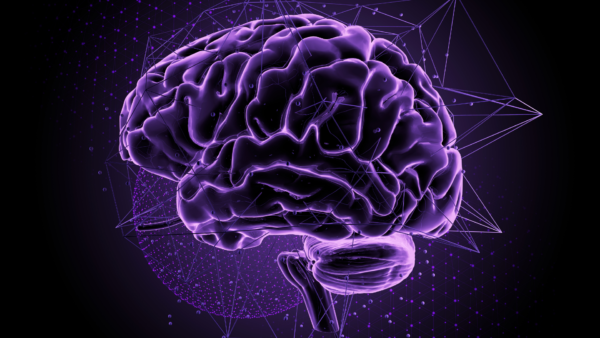
A Brief Journey into Our Unique Brain

Think about your brain – you will immediately say that it is like no other organ. Of all the human organs, the brain is the last to be demystified. The discovery of its anatomy and functions spans millennia.

Today, the neuroscientific study of the brain is an unfinished adventure and still very mysterious. Yes, our brain is different from all our other organs; it does not beat like our heart, it does not expand and contract like our lungs, it does not secrete visible substances like our bladder and intestines. But it is what keeps us alive, it is the center of consciousness, it is not ordinary at all…

Now let’s take a short trip to our brain:

Our brain, which weighs an average of 1300-1400 grams, has an extremely compact structure. When all the folds in the brain are flattened, it covers an area of about 2300 cm.

There are 100 billion nerve cells in our brain. These are the neurons that regulate heartbeat, breathing, blood pressure, control hunger, thirst, sex drive, sleep patterns.

10 billion transmitters are generated every moment. The signals carried by nerve cells travel extremely fast on neurons.

Our brain makes up 2% of our body but consumes 20% of our oxygen.

Our primitive and middle brain is 500 million years old, while our new brain is 3-4 million years old.

We use all of our brain, not just 10% of it. Brain imaging techniques show that every region of the brain is actively working. 

It is the center of our emotions that govern our behavior.

It is responsible for what we know and what we don’t know.

Our brain is selective. Although it is constantly recording an enormous amount of information, it selects only a tiny fraction of this information for processing.

Every brain is unique. The differences in each brain allow each individual to have unique personalities.

Although the brain cells in our brains do not reproduce, they can change, meaning that brain tissue can be strengthened and developed like a body muscle, depending on how much it is exercised.

Fortunately, we do not lose brain cells as we age, and we can regenerate the lost ones by activating them.

The characteristics of our brain:

It is egocentric

 Likes contrasts

Loves what is understandable

Remember the beginning and end of processes, the in-between boils away

Visual

Emotional

Loves stories

Neuroscience research has been developing at an ever-increasing pace in recent years, illuminating the complex mental and emotional processes of the brain. In this context, Electroencephalogram (EEG, brain electrical activity) and functional Magnetic Resonance Imaging (fMRI, brain blood circulation) methods, which allow the measurement of brain activity without causing any pain or damage to the subject, are the most important scientific tools at the disposal of neuromarketing.

Considered as a new generation method in today’s marketing world, ‘Neuromarketing’ is the neurological and physiological study of the mind’s subconscious reactions to various stimuli. Today, it has been scientifically proven that the unconscious mind is very effective in consumer decisions. Using this method, consumers’ unconscious perceptions, tastes, preferences, reactions and purchasing tendencies are scientifically measured.

The main advantage of the neuromarketing method is that it offers the opportunity to look at the consumer world from a broad perspective by shedding light on the parts that remain in the dark in consumer attitudes and behaviors. Technologies such as EEG, Mobile EEG, Eye Tracking, Facial Emotion Matching and Galvanic Skin Resistance are used for measurements in neuromarketing research.

“The brain loses millions of cells every day, and lost brain cells can be replaced” – Amy Cuddy” Presence

“The number of nerve cells is the same at 70 as it is at 20” – Amy Cuddy Presence

“We are not thinking machines that feel, we are feeling machines that think” – Antonio Damassio”

The transfer of 100 billion cells into a machine, immortality, is just around the corner… 

Reference:

Carter, Rita. Beyin Kitabı (s.38,39). Alfa Yayınları.

Cuddy, Amy. Presence (p.352). Little, Brown and Company. (01/30/2018).